The differences between AI sales automation tools and traditional approaches are significant. AI-powered sales automation can analyze live inputs, adapt to situations instantly, make decisions, and act. Traditional workflow automations depend on predefined conditions and code. Companies now prefer combining these approaches instead of choosing one over the other. They use AI agents as the intelligent layer while workflows serve as the execution engine.
Sales teams face crucial questions about this development. They need to know the right time to implement AI-driven sales automation and areas where traditional tools remain effective. The challenge lies in combining these technologies to build the most powerful AI sales automation platforms. This piece delves into the key differences between these technologies and shows how they can work together to revolutionize your sales funnel.
What Makes AI Sales Agents Different from Traditional Automation?
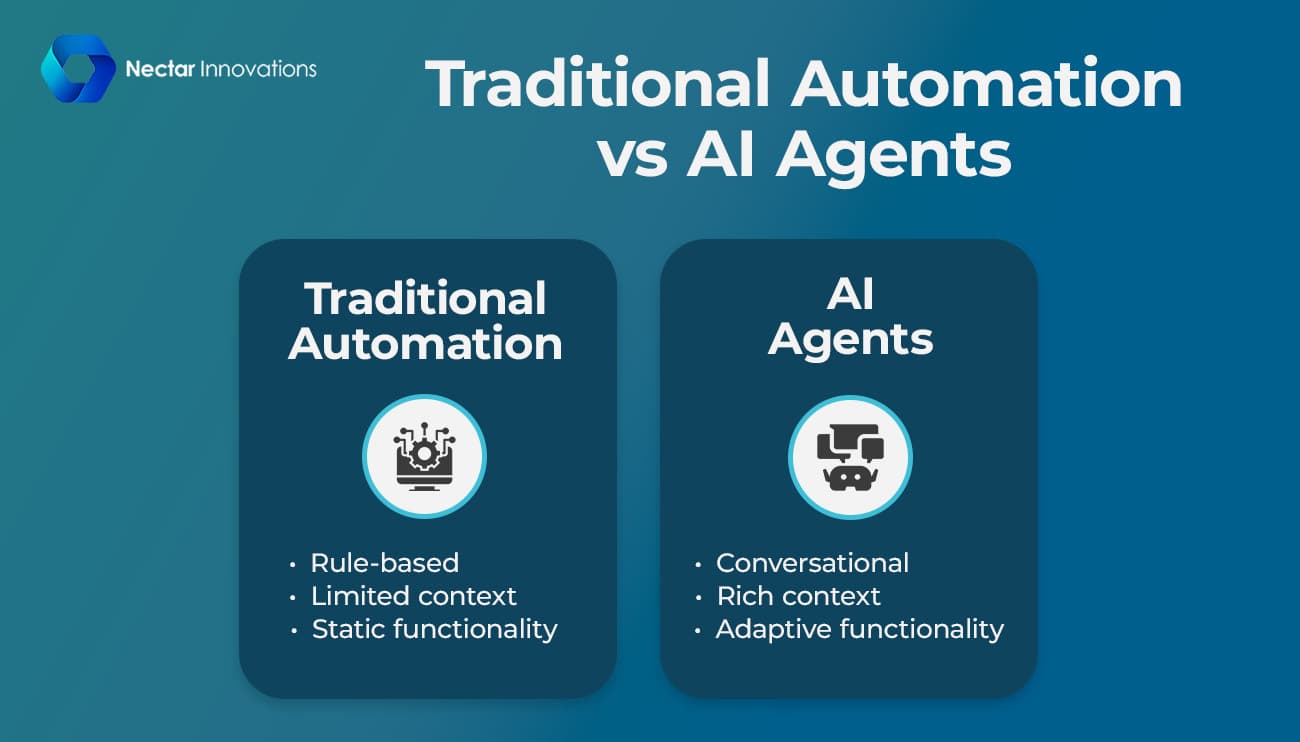
AI sales agents and traditional automation differ in how they work. AI agents work independently to notice, decide and act on their own. They get better with each interaction. Traditional automation tools just follow preset steps and only change when someone rearranges them.
- Triggering Logic: Event-Driven vs Scheduled Execution
Traditional automation relies on fixed rules and structured inputs. These systems work step by step - they spot an event like someone submitting a form and then follow exact instructions to complete tasks.
AI sales agents work differently. They gather inputs from many sources and formats. They use natural language understanding and other skills to handle different types of input. This lets them spot subtle signals and behavior patterns that traditional systems would miss.
- Decision-Making: Predictions vs Predefined Rules
Comparison: Decision-Making Approaches
|
AI Sales Agents
|
Traditional Automation
|
|
Autonomous reasoning frameworks
|
If-then instructions
|
|
Learning from experience
|
Fixed workflows
|
|
Continuous improvement
|
Manual updates required
|
|
Adaptable to new scenarios
|
Limited to predefined cases
|
Traditional automation follows "if-then" rules and preset workflows. To cite an instance, an RPA bot can't sort customer support tickets by urgency - it just processes them in order.
AI agents take a different approach. They use machine learning, NLP, and advanced tech to make their own decisions. They can assess ticket content, understand feelings, and sort by urgency.
- Context Awareness: Real-Time Adaptation vs Static Logic
AI agents grasp context from user intent, environment, and past interactions. This helps them act smarter. They study interactions and results to improve through reinforcement learning.
An AI-powered inventory agent shows this well. It watches many data sources - sales history, weather forecasts, customer behavior - and adjusts reorder amounts when it spots demand changes. These agents can also react to changes and check new data live to suggest better delivery routes.
Traditional automation stays fixed after setup. It needs manual updates as business needs change.
How AI Sales Agents Reshape the Sales Funnel
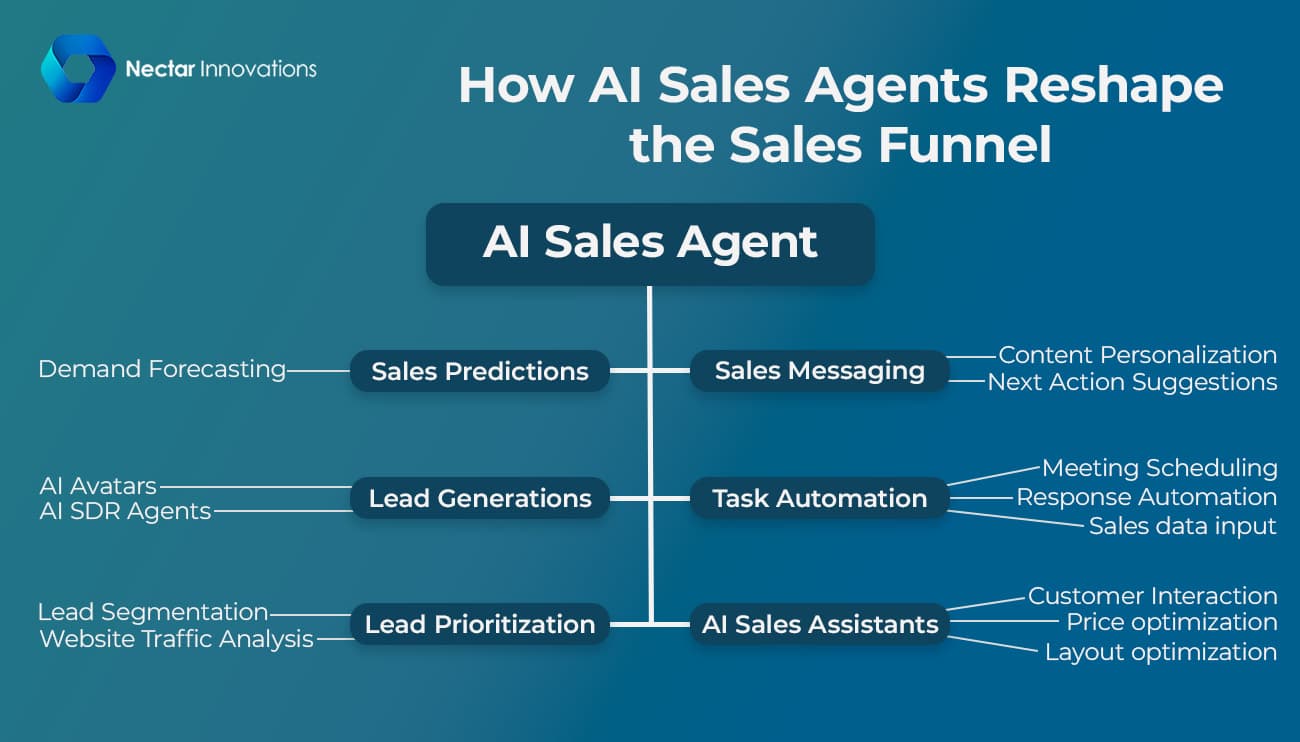
Sales teams now face a major transformation in how potential customers move through the sales funnel. AI sales agents are reshaping this process with smart automation that adjusts to buyer behavior right away.
- Lead Qualification: Dynamic Scoring vs Rule-Based Filters
AI lead scoring has changed qualification by spotting complex patterns that traditional systems can't see. Standard rule-based scoring gives fixed points to specific actions. However, AI models keep learning from each interaction to predict who might buy. Teams that use predictive lead scoring get 20-30% better conversion rates compared to old-school methods.
AI sales agents look at data from over 350 digital touchpoints for each lead. They can spot signs of serious buyers even from unknown visitors - something regular systems completely miss. On top of that, AI lead scoring helps sales and marketing teams work together using analytical insights instead of gut feelings.
- Follow-Up Automation: Personalized Outreach vs Templated Sequences
AI vs Traditional Follow-Up Approaches
|
AI Sales Agents
|
Traditional Automation
|
|
Analyzes response patterns to adapt messaging
|
Follows preset calendar regardless of engagement
|
|
Personalizes based on buyer context
|
Sends templated messages on schedule
|
|
Coordinates across multiple channels
|
Often limited to single-channel sequences
|
|
Manages ~150 leads daily at $5-15 per lead
|
Handles 20-30 leads daily at $20-50 per lead
|
- Sales Coaching: Real-Time Feedback vs Manual Review
AI coaching has changed how sales teams develop through personalized, on-demand guidance. Modern AI coaches study call recordings and live interactions. They give quick feedback about tone, clarity, and handling objections. This marks a big step forward from traditional coaching that relies on managers who have limited time.
Sales teams using AI-powered coaching are 36% more likely to win deals. These numbers show just how good these systems have become at developing sales talent.
When to Combine AI Agents and Automation Tools
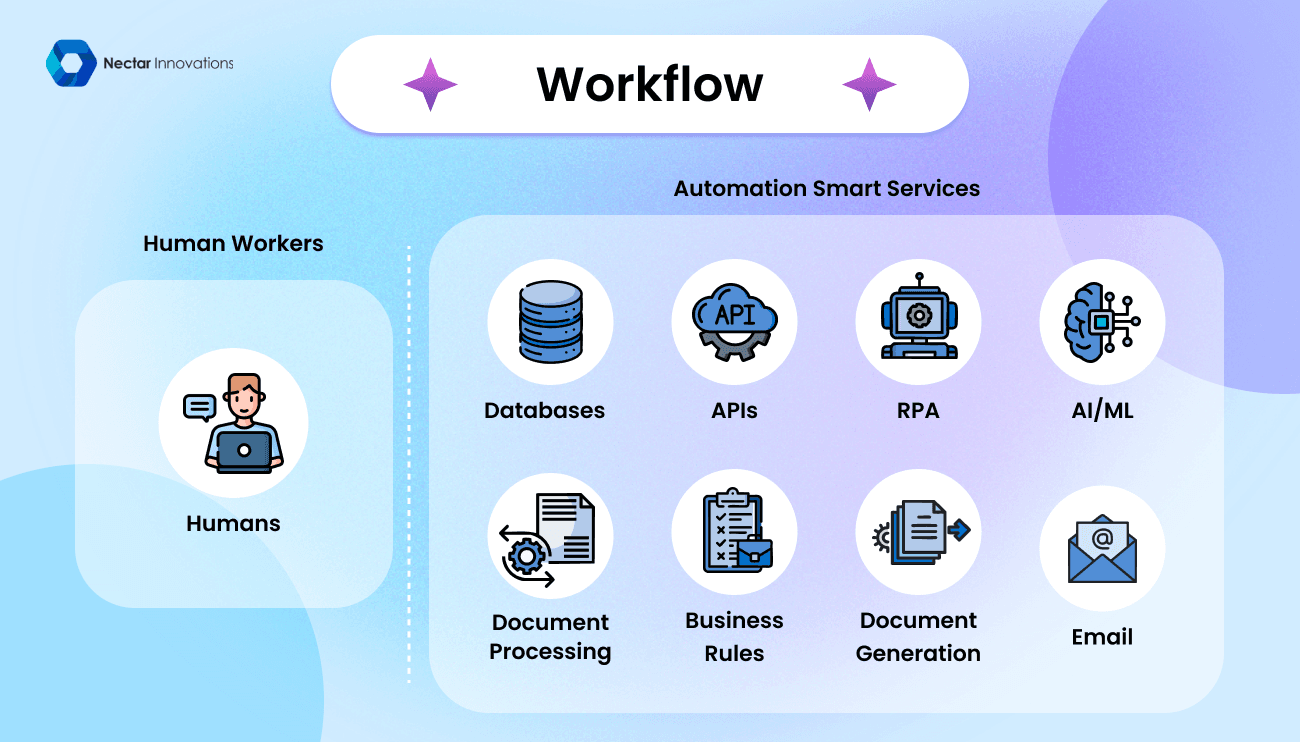
Modern sales teams combine AI agents with traditional automation to get better results. This hybrid approach brings together AI's smart decision-making with automation's reliable execution.
- Hybrid Workflows: Agents for Reasoning, Automation for Execution
The best sales systems let AI agents handle complex reasoning while automation takes care of structured tasks. This combination allows each technology to shine in its specialty.
Companies should build automation as their backbone for daily tasks and add AI capabilities to make smarter decisions and adapt quickly.
AI Agent & Automation Synergy
|
AI Agents Handle
|
Traditional Automation Handles
|
|
Dynamic customer interactions
|
CRM updates and data sync
|
|
Personalized outreach strategies
|
Scheduled follow-ups
|
|
Complex lead qualification
|
Compliance documentation
|
|
Sales coaching and feedback
|
Audit trails and approvals
|
- Guardrails and Autonomy: Balancing Control with Flexibility
AI agents' growing capabilities make governance frameworks vital. Good guardrails set clear boundaries for what agents can do, when they can do it, and who oversees them. Companies need strong authentication, role-based access control, and detailed logging for all AI-driven changes.
- Team Enablement: Equipping Non-Technical Users with AI
Non-technical staff members add valuable domain expertise to AI projects. Their deep understanding of business operations helps identify challenges and opportunities that technical approaches might miss. Today's tools let subject matter experts train AI models without coding skills. This helps sales teams access information without extensive technical training.
Where Traditional Automation Still Wins
AI technologies are advancing rapidly, but 20-year old automation solutions still offer unique benefits in many business scenarios. Their proven track record and consistent results make them the best choice for specific tasks.
- Structured Repetitive Tasks: CRM Updates, Data Sync
Traditional automation works best with routine, predictable tasks that follow set patterns. CRM integrations sync customer data automatically between systems and eliminate duplicate entries. Your data stays organized across all platforms. These tools handle invoicing, scheduling, and data entry with precision. Sales teams still rely on traditional tools to build relationships and navigate complex sales that need human expertise.
- Compliance-Driven Processes: Audit Trails and Approvals
Traditional automation becomes invaluable in regulated industries where compliance matters most. Companies that use sales compliance automation see 60% fewer errors and cut their administrative time in half. These systems create audit trails that track every client interaction chronologically. This documentation serves as proof for regulatory compliance. Organizations must keep audit logs for at least 366 days during SOX audits. Traditional systems excel at this task because of their structured data storage approach.
- Scalability and Reliability in High-Volume Scenarios
Traditional automation delivers steady results in high-volume operations without constant monitoring. Process automation tools handle data entry and orders accurately. Companies can grow their operations without hiring more staff. Teams can boost their output by automating key parts of their daily workflows.
Conclusion
AI sales agents and traditional automation tools offer two different ways to boost sales operations. Each brings unique strengths to the table. These technologies work best together and can reshape the scene of sales processes when combined properly.
AI sales agents shine at dynamic decision-making and handle complex customer interactions well. They learn from experiences continuously. Their power to process information from hundreds of touchpoints and adapt immediately has transformed lead qualification and customized outreach, so conversion rates improved by 20-30%.
Traditional automation tools still have major advantages in specific cases. Without doubt, these time-tested systems work better for structured repetitive tasks and compliance-driven processes. They excel at high-volume operations where consistency matters most. Sales teams that use compliance automation through traditional tools see 60% fewer errors and cut their administrative time in half.
Today's most successful sales teams don't pick one over the other—they blend both technologies smartly. This combined approach uses AI for smart decisions while traditional automation handles reliable execution. To cite an instance, AI qualifies complex leads and personalizes content while traditional automation keeps
CRM updates and compliance documents consistent.
The road ahead requires sales professionals to understand both technologies' strengths and limits clearly. Companies that balance AI's reasoning power with automation's reliable execution will lead the future. They must maintain proper guardrails and governance frameworks.
The real question isn't about choosing between AI sales agents and traditional automation. It's about combining both smartly to create sales processes that work better and faster than ever before.
Key Takeaways
Understanding the fundamental differences between AI sales agents and traditional automation helps sales teams make strategic technology decisions that maximize both efficiency and effectiveness.
- AI agents excel at dynamic decision-making and personalization, analyzing 350+ touchpoints per lead and achieving 20-30% higher conversion rates through adaptive learning and real-time context awareness.
- Traditional automation remains superior for structured, compliance-driven tasks, reducing errors by 60% in regulated processes while maintaining reliable audit trails and handling high-volume repetitive operations.
- Hybrid workflows deliver optimal results by combining AI reasoning capabilities with automation execution—using AI for complex customer interactions while automation handles CRM updates and compliance documentation.
- Cost efficiency varies significantly between approaches: AI agents process 150 leads daily at $5-15 per lead versus traditional automation handling 20-30 leads at $20-50 per lead.
- Implementation success requires strategic balance, establishing governance frameworks and guardrails while empowering non-technical users to leverage AI capabilities alongside proven automation systems.
The most successful sales organizations aren't choosing between these technologies—they're strategically integrating both to create workflows that are simultaneously more intelligent and more reliable than either approach alone.



 by
by