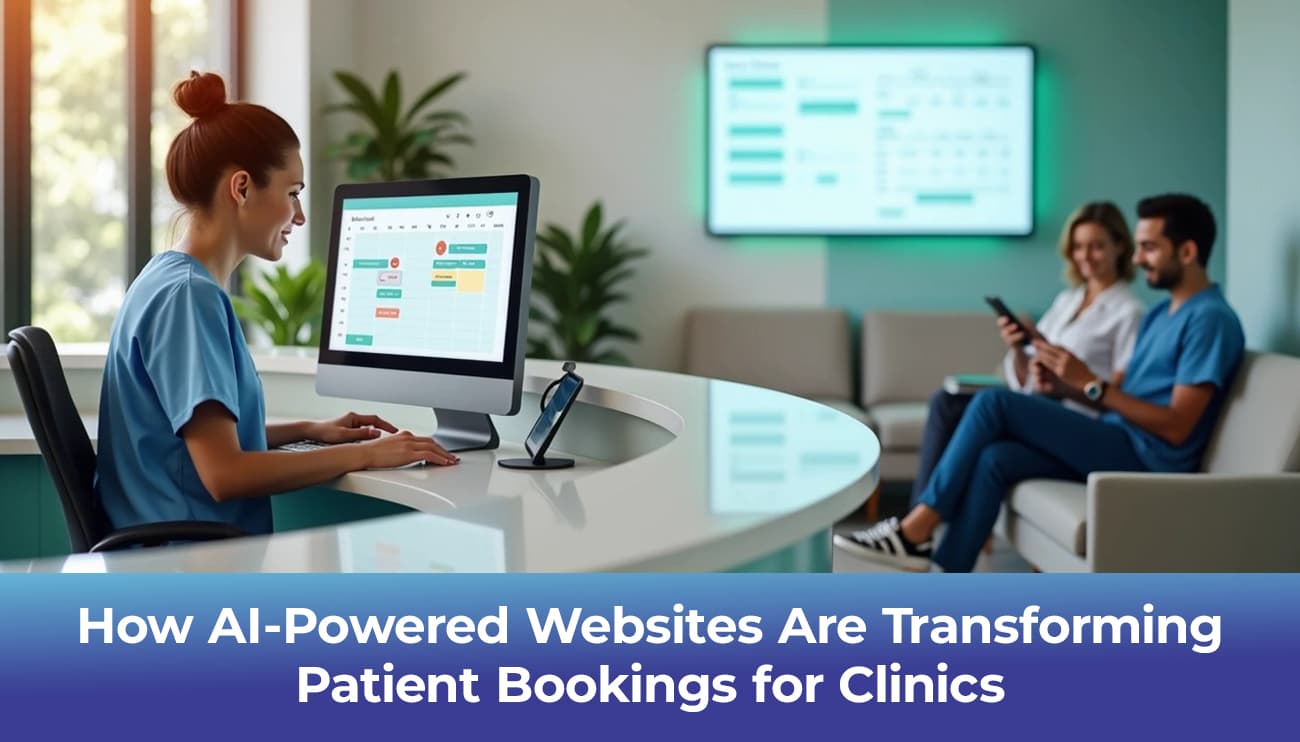
Healthcare spending will hit $4.9 trillion in 2023, with per capita spending reaching $14,750. These numbers highlight why clinics need affordable solutions quickly. AI appointment booking systems provide a compelling answer to these challenges. Clinics that use AI appointment bots can automate up to 80% of repetitive scheduling tasks and cut no-show rates by up to 40%. These systems work continuously, so patients can change their appointments anytime, even after business hours.
This piece examines how AI-powered websites are revolutionizing patient bookings. It details the technology behind these systems and outlines practical steps clinics can take to implement this solution successfully.
What is an AI-powered website for patient bookings?
AI-powered websites for patient bookings automate the whole scheduling process. These systems handle everything from first appointment requests to reminders and follow-ups. Patients can book appointments anytime without manual oversight. The online appointment scheduling software market has grown significantly to USD 546.10 million. Experts project it will reach over USD 1.50 billion by 2032.
- How AI websites differ from traditional scheduling systems
Traditional scheduling relies on phone calls, manual data entry, and works only during business hours. AI booking systems never stop working and can handle multiple requests at once. Research shows that 81% of consumers prefer businesses that let them schedule appointments online.
|
Traditional Scheduling
|
AI-Powered Scheduling
|
|
Staff manually books appointments
|
Automated 24/7 self-scheduling
|
|
Phone tag and voicemail issues
|
Instant confirmations and responses
|
|
Limited to business hours
|
Available anytime, anywhere
|
|
One booking at a time
|
Handles multiple bookings simultaneously
|
|
Prone to human error
|
Reduces scheduling errors
|
|
No data analysis
|
Provides insights on booking patterns
|
Traditional systems need humans to make adjustments, which creates inefficiencies and delays. AI systems can spot potential conflicts or bottlenecks early and fix them before they become problems.
- Key technologies behind AI appointment booking
AI scheduling platforms use several important technologies:
- Natural Language Processing (NLP) - Understands patient requests in text or voice format, even accommodating slang and informal language
- Machine Learning - Analyzes historical data to predict no-shows, optimize appointment slots, and personalize scheduling
- Predictive Analytics - Forecasts demand patterns, identifies high no-show risk appointments, and suggests optimal scheduling times
- Integration APIs - Connect with electronic health records (EHRs), practice management software, and calendar systems
- Examples of AI tools used in clinics
Healthcare settings now have many AI scheduling tools at their disposal. Veradigm's Predictive Scheduler uses AI to forecast patient demand and prioritize urgent cases while minimizing disruption to scheduled patients. Platforms like Hyro offer complete scheduling solutions where patients can find doctors, filter by attributes, and book appointments without staff involvement. The results speak for themselves - hospital networks using these solutions have cut no-shows by 25% in just six months.
How do AI-powered websites improve the patient booking experience?
Healthcare consumers today want everything to be easy and convenient. AI-powered patient scheduling systems make booking appointments simple and beneficial for everyone involved. Research shows that patients book 75% of appointments outside regular business hours.
- 1. 24/7 appointment access and self-service
Patients can book appointments anytime they want with AI scheduling tools that work round the clock. The data backs this up - 40% of healthcare appointments are booked after regular office hours. Patients can now manage their healthcare whenever it suits them instead of working around clinic hours.
|
Traditional Booking
|
AI-Powered Booking
|
|
Limited to business hours
|
Available 24/7/365
|
|
Requires staff interaction
|
Self-service enabled
|
|
Average call time: 8 minutes
|
Instant booking
|
- 2. Reduced no-shows with automated reminders
Smart reminder systems cut missed appointments by up to 30%. These systems use up-to-the-minute data analysis to spot patients who might miss appointments and send them extra reminders. A recent study shows that AI scheduling boosted attendance rates by 10% each month and made hospitals 6% more efficient.
- 3. Personalized scheduling based on patient history
AI systems look at patient details and behavior patterns to match appointments better. They look beyond basic scheduling to include clinical needs, language priorities, and past doctor-patient relationships. Each patient gets a more personal experience this way.
- 4. Real-time availability and instant confirmations
AI booking platforms sync perfectly with clinic calendars to show only time slots that are actually free. Patients get their confirmations right away without waiting for staff to check. Smart systems quickly offer any canceled slots to waiting patients.
- 5. Multichannel booking via chat, SMS, and voice
Patients choose how they want to schedule - through website chatbots, SMS, or voice assistants. These AI tools understand everyday language when patients explain what they need. Kaiser Permanente's AI Navigator lets patients type their needs in their own words, so there's no need to navigate through preset menus.
What are the benefits for clinic staff and operations?
Medical practices' staff productivity has a direct effect on the quality of patient care. AI scheduling solutions bring measurable benefits to operations that go beyond making patients happy.
- 1. Less time spent on phone calls and admin tasks
The administrative team gets back 15-25 hours each week that they used to spend on phone duties. Medical practices that use AI receptionists see their administrative work drop by 30-40%. A regular scheduling call takes about 8 minutes, while AI handles these tasks right away.
- 2. Fewer scheduling errors and double bookings
AI scheduling tools spot scheduling conflicts to stop appointments from overlapping. These systems keep watching schedules to prevent booking mix-ups. Double-bookings are pretty much eliminated through automatic schedule syncing.
- 3. Better resource allocation and staff productivity
AI predictive models look at past and current data to predict how many patients will come in and how many staff members are needed. This improvement has helped healthcare facilities cut their temp staff needs by 50% and boost productivity by 6%. On top of that, AI scheduling has shown a 10x-15x ROI in just the first year.
- 4. Integration with EMRs and practice management tools
AI assistants grab medical records straight from EMR systems to check patient details. This makes data flow smoothly between scheduling systems and clinical records. Medical practices report fewer mistakes in scheduling protocols as AI tools connect well with practice management software. The core team can now focus on caring for patients instead of paperwork.
How to implement AI appointment booking in your clinic
AI appointment scheduling needs a step-by-step approach to work well. A structured plan helps clinics reduce disruption and get the best returns. Many practices report an 80% drop in administrative work.
- 1. Assess your current scheduling problems
Your first step should be looking at how your current scheduling system works and finding its weak spots. Watch for problems like missed appointments, inflexible time slots, or booking delays. Your team's input will help set clear goals. Look at numbers like no-show rates, booking times, and how long patients wait. These numbers will help pick an AI solution that fits your practice's needs.
- 2. Choose the right AI scheduling platform
The platform should have:
- HIPAA compliance and data security
- Integration with existing EMR and practice management systems
- Healthcare-specific functionality
- Room to grow with your practice
- 3. Train staff and educate patients
Build a complete training program with hands-on practice, easy-to-follow manuals, and ongoing support. Create simple guides to help patients use online booking. Test with a small group of patients before rolling it out completely.
- 4. Monitor performance and make improvements
Keep track of important numbers after launch. Use what you learn to make your processes better and work faster. Clinics using AI scheduling see patient engagement improve by up to 35%.
Conclusion
AI-powered websites have revolutionized medical clinic appointment systems. Modern healthcare providers now automate 80% of scheduling tasks and cut no-shows by 40%, moving away from old phone-based systems.
These technological advances help patients in many ways. They can now book appointments 24/7 without the hassle of phone tag or hold times. The system creates more relevant appointments based on patient history and sends reminders to ensure attendance. Patients take charge of their healthcare through self-service options on multiple channels.
The clinic's core team sees remarkable improvements too. Administrative staff used to spend 15-25 hours every week just handling phone calls. These valuable hours now go toward direct patient care. EMR system integration creates uninterrupted data flow that cuts errors and enhances care quality.
Setting up AI scheduling needs careful planning, but the benefits are worth it. Healthcare organizations typically see 10-15 times return on investment in just one year. Patient satisfaction grows as booking becomes easier.
Without doubt, AI-powered solutions will lead healthcare scheduling into the future. As technology advances, patients will expect convenient, tailored booking options. Healthcare providers who welcome these tools will thrive in this competitive, patient-focused environment. The system works better for everyone when patients and providers save time, reduce stress, and get better results.
Key Takeaways
AI-powered scheduling systems are revolutionizing healthcare by automating appointment booking, reducing costs, and improving patient satisfaction while freeing up valuable staff time for direct patient care.
- AI scheduling systems automate 80% of repetitive tasks and reduce no-shows by 40%, saving clinics significant time and money
- Patients gain 24/7 booking access with instant confirmations, eliminating phone tag and business hour restrictions
- Staff reclaim 15-25 hours weekly from administrative duties, allowing more focus on direct patient care
- Implementation delivers 10-15x ROI within the first year through reduced operational costs and improved efficiency
- Integration with EMR systems creates seamless workflows while maintaining HIPAA compliance and data security
The transformation from manual scheduling to AI-powered systems represents a critical evolution in healthcare operations, addressing the $150 billion annual cost of missed appointments while meeting modern patient expectations for digital convenience.



 by
by