Chatbots that start conversations with customers can recover 35% of abandoned carts. This makes them one of the most profitable tools available. E-commerce sales will reach $6.3 trillion in 2024, and businesses now see chatbots as vital tools rather than optional extras. The value goes beyond just saving money. Customers will pay more for great experiences, with 86% willing to increase their spending. Brand loyalty also rises, as 72% of consumers stick with companies that offer tailored interactions. In this piece, we'll explore how AI chatbots triple sales and why they've become crucial for innovative ecommerce businesses in 2025.
What are AI chatbots in ecommerce and how have they evolved?
AI chatbots in ecommerce are computer programs that simulate human conversations with online shoppers. These digital assistants have grown from simple tools into sophisticated sales engines that offer tailored interactions, product recommendations, and complete purchase assistance.
- From rule-based bots to AI-powered assistants
The original ecommerce chatbots used simple rule-based systems with predefined scripts and decision trees. These early bots worked on conditional "if-then" logic and simple keyword detection. They provided templated answers to predicted questions. The bots worked well for straightforward tasks but couldn't handle unexpected queries or complex customer needs.
The digital world changed when rule-based bots developed into AI-powered assistants. Modern AI chatbots now use advanced algorithms to understand the context and intent behind customer messages. They generate their own answers instead of picking from predetermined responses. Rule-based bots follow fixed pathways, while AI-powered chatbots create dynamic conversations that get better with each interaction.
|
Rule-Based Chatbots
|
AI-Powered Chatbots
|
|
Fixed scripts and responses
|
Self-learning with ongoing improvement
|
|
Keyword recognition only
|
Context and intent understanding
|
|
Limited to predefined scenarios
|
Can handle unexpected questions
|
|
No personalization
|
Remembers user priorities
|
|
Requires manual updates
|
Automatically adapts and develops
|
- The role of NLP and machine learning
Natural Language Processing (NLP) is the life-blood technology that helps AI chatbots understand human language nuances. These systems analyze user inputs through NLP to identify intentions and needs. Chatbots can understand questions whatever the phrasing and detect relevant contextual information for smoother conversations.
Machine learning algorithms improve these capabilities by helping chatbots self-learn and build increasingly intelligent knowledge bases. AI chatbots get better at understanding user goals and delivering accurate responses the longer they operate. The system recognizes patterns and makes refined predictions with each interaction in this continuous improvement cycle.
- Why 2025 is a turning point for ecommerce chatbots
The year 2025 represents a watershed moment for ecommerce chatbots because of unprecedented market growth and technological maturity. The global chatbot market stands at $5.84 billion today and will reach $61.97 billion by 2035. Industry analysts predict that over 80% of customer support organizations will use some form of AI to improve efficiency by the end of 2025.
This surge comes from major advances in generative AI and large language models that have improved chatbot capabilities. These technologies have pushed chatbots beyond simple question-answering. They have become skilled architects of highly tailored customer experiences, with 70% of CX leaders confirming this development.
How AI chatbots are driving 3X more sales in 2025
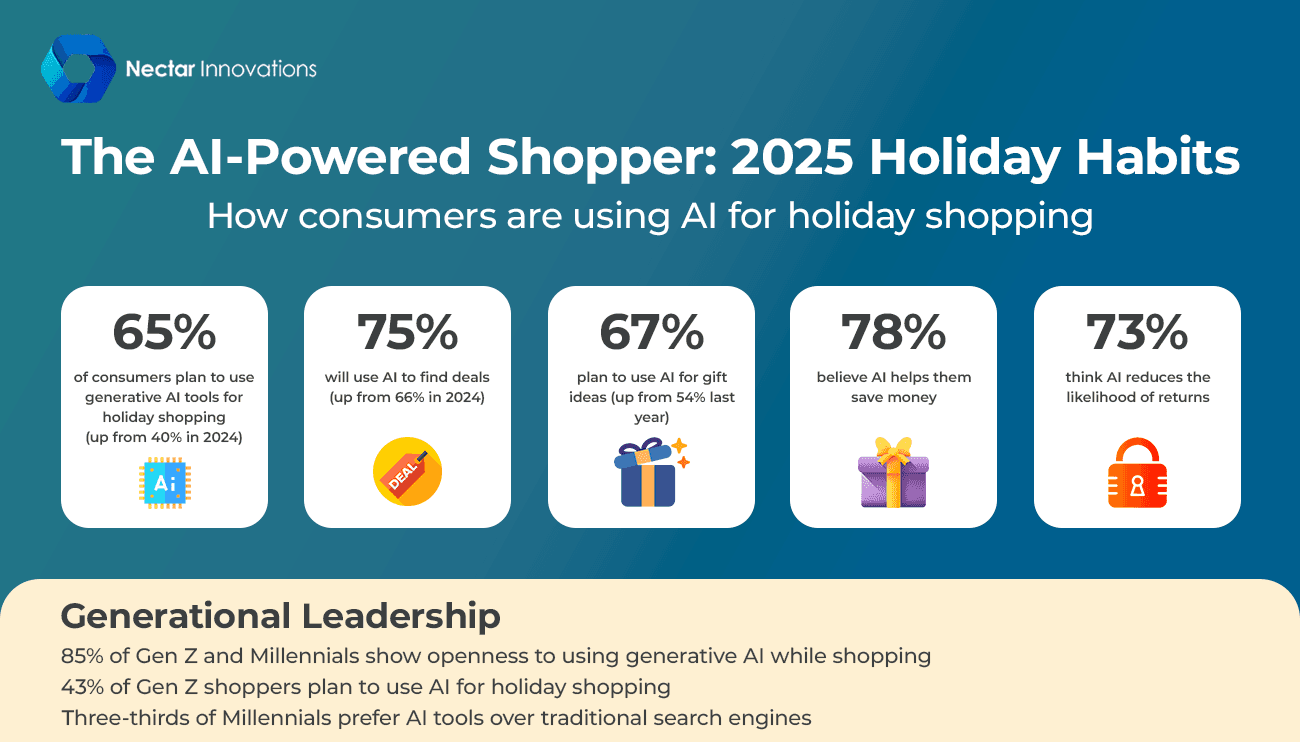
The numbers paint a clear picture - AI chatbots have evolved beyond basic support tools into powerful sales drivers that are changing e-commerce revenue significantly. Morgan Stanley projects that AI agents will serve almost half of American shoppers by 2030, potentially adding $115 billion to U.S. e-commerce spending.
- 1. Individual-specific product recommendations
AI chatbots study browsing history, past purchases, and live behavior to suggest products that match each shopper. The results speak for themselves - 12.3% of shoppers who interact with AI-powered chat end up buying, compared to just 3.1% of those who don't—making it four times more effective.
- 2. Live customer support and participation
Today's chatbots give instant help when customers need it most. AI conversations now resolve 93% of customer questions without human help. Quick support prevents frustrated customers from abandoning their purchases.
- 3. Cart abandonment recovery
AI spots signs of cart abandonment and takes action right away instead of letting customers leave. Chatbots that start conversations proactively have won back 35% of abandoned carts, saving sales that would have been lost.
- 4. Upselling and cross-selling opportunities
AI chatbots recommend matching products based on cart items and customer priorities. These smart suggestions have increased Average Order Value by 25% for returning customers who use AI chat while shopping.
- 5. Simplified checkout and payment help
Chatbots make checkout smoother by answering questions instantly and guiding sales. McKinsey's research shows retailers using generative AI for personalized suggestions can grow basket size by 2-4%.
- 6. Round-the-clock availability
AI support helps businesses resolve complaints 90% faster. Customers can get help anytime they shop, whatever their time zone.
- 7. Multiple languages and platforms
Modern AI chatbots detect languages automatically and keep track of conversations across platforms. Customers who get excellent service across all channels bring 1.6 times more lifetime value than those with basic experiences.
- 8. Analytical insights for marketing and sales
Every chat creates valuable data about customer priorities and problems. These insights improve product development, marketing strategies, and websites through continuous feedback that boosts business results.
What are the key benefits of using AI chatbots for ecommerce?
AI chatbots do more than just boost sales. These tools give ecommerce businesses several strategic advantages that affect customer experience and help improve operations.
- Improved customer satisfaction and loyalty
Research from Harvard Business School shows AI chatbots raised customer sentiment scores by 1.63 points and cut response times by 22%. Customer feedback proves this works - 87% of people rate their chatbot interactions as positive or neutral. Customers are happier because they get help right away, which stops them from leaving due to long wait times.
- Reduced operational costs
The numbers tell a clear story. AI chatbots handle customer conversations at $0.50-$0.70 per interaction, while human agents cost $8.00-$15.00 - making chatbots 12-20 times more cost-effective. A business that deals with 10,000 tickets monthly can save $40,000-$75,000 each month by automating just half their support. Alibaba's success shows this well - they save about $150 million every year by using chatbots.
- Faster response times and resolution
AI chatbots respond in 2-10 seconds, much faster than email or live chat. Speed makes a big difference since 58% of customers leave if they don't get help within two minutes. Klarna's chatbot lets customers solve their problems in under 2 minutes, a huge improvement from their old 11-minute average.
- Scalability during peak seasons
Human teams have limits, but AI chatbots can handle thousands of conversations at once. The quality stays the same whatever the volume. This becomes really valuable during busy seasons, flash sales, or product launches that bring sudden spikes in support needs.
- Consistent brand messaging
AI chatbots ended up being great at delivering the same message everywhere. They share accurate information and stick to brand guidelines. About 72% of customer experience leaders believe AI can match their brand's voice and style, even with thousands of daily conversations.
How to choose and implement the right ecommerce chatbot
The right AI chatbot can make a big difference to your sales numbers. Small businesses do well with user-friendly tools like Tidio or ManyChat. Larger companies might need more flexible platforms like Drift or Ada.
- Evaluating AI sophistication and NLP capabilities
Your ecommerce chatbot needs Natural Language Processing (NLP). The latest systems combine NLP with Retrieval-Augmented Generation (RAG) and knowledge graphs to deliver better accuracy. The quality of NLP matters because 88% of consumers used chatbots last year. About 80% had good experiences directly linked to how well the NLP worked.
- Integration with platforms like Shopify and Magento
The system needs to work smoothly with your current technology. Look for chatbots that connect naturally with your ecommerce platform (Shopify, Magento) and
CRM systems. Magento stores can use extensions like Mirasvit's AI Assistant that integrate deeply with product catalogs. Shopify users get one-click integrations to sync products and orders without needing a developer.
|
Platform
|
Integration Considerations
|
|
Shopify
|
Native plugins, inventory synchronization
|
|
Magento
|
API compatibility, theme compatibility
|
|
Custom Sites
|
Webhook support, JavaScript implementation
|
- Understanding pricing models and ROI
Here's how to calculate your chatbot's ROI: ROI (%) = ((Savings + Additional Revenue – Total Monthly Costs) / Total Monthly Costs) × 100. Most businesses cut customer service costs by 30-40% in the first year. Automated chats cost $0.50-$0.70 compared to $8.00-$15.00 for human agents.
- Training the chatbot with your product and customer data
The way you train your chatbot really affects how well it performs. The best chatbots learn from:
- Website content and FAQs
- Product descriptions and catalogs
- Previous customer conversations
- Support tickets and knowledge bases
YourGPT connects all these sources without any coding and creates one knowledge base. The system can update automatically whenever source content changes through auto-reindexing.
- Ensuring compliance with data privacy regulations
Data privacy matters - 82% of customers stay away from companies that don't protect their data well. Your solution should follow GDPR and similar regulations by using:
- Explicit opt-in consent mechanisms
- Clear data usage policies
- Data minimization practices
- Secure encryption protocols
Need help picking the right option? with experts to find the perfect AI chatbot for your ecommerce needs
Conclusion
AI chatbots are revolutionizing ecommerce by creating customized shopping experiences that boost sales. Businesses using chatbots see triple the conversions compared to those using traditional customer service alone. The results are clear - personalized product recommendations lead to 4x higher conversion rates and help recover 35% of abandoned carts.
Your business needs should drive the choice of AI chatbot solution. Small businesses do well with user-friendly platforms like Tidio. Large enterprises need more complex platforms with advanced NLP capabilities. The right solution must blend with your existing ecommerce system and deliver ROI through reduced costs and increased revenue.
These chatbots do more than just boost direct sales. They provide round-the-clock support that makes customers happier. Businesses can cut service costs by 12-20 times compared to human-only teams. This combination gives companies a strong edge in today's crowded digital world.
AI chatbots will keep getting smarter as they learn and adapt. Companies that start using them now will capture more market share as customers expect quick, customized service. Not sure which chatbot works best for your business? with experts who can help you pick the right solution.
Smart planning and data privacy matter when setting up AI chatbots. The returns make them one of the best investments for growing ecommerce businesses. This technology has moved from a nice-to-have to a must-have. Companies that don't adapt risk falling far behind their competitors who use AI by 2025 and beyond.
Key Takeaways
AI chatbots are transforming ecommerce by delivering personalized experiences that drive measurable sales growth, with businesses seeing up to 3X more conversions through intelligent automation.
- AI chatbots deliver 4X higher conversion rates through personalized product recommendations and real-time customer engagement during critical purchase moments.
- Cart abandonment recovery reaches 35% success rates when AI proactively engages customers who show exit signals, reclaiming otherwise lost sales.
- Operational costs drop by 12-20X as chatbots handle customer interactions for $0.50-$0.70 versus $8.00-$15.00 for human agents while maintaining 24/7 availability.
- Customer satisfaction improves significantly with 93% of questions resolved without human intervention and response times under 10 seconds versus lengthy email waits.
- Strategic implementation is crucial - evaluate NLP capabilities, ensure seamless platform integration, and prioritize data privacy compliance for maximum ROI.
The technology has evolved from basic rule-based systems to sophisticated AI assistants that learn continuously, making them essential competitive tools rather than optional luxuries for ecommerce success in 2025.



 by
by