That tension is real. Here's what I've seen change.
Support teams hit a breaking point somewhere between 30-50 tickets per agent daily. I've watched this pattern across healthcare, financial services, and manufacturing—the math stops working. Companies that used to handle growth by hiring more people now find themselves unable to scale fast enough.
The shift isn't subtle. In 2024, I started seeing hiring freezes at the Tier-1 level. Not layoffs—just natural attrition as AI systems handle more of the routine work. 28% of companies report this trend, but the real number feels higher based on what I'm hearing from peers.
Here's what's different: AI agents crossed a threshold in 2025. They moved from helping people do work to doing the work independently. Most CEOs I advise are now asking the same question—not whether they should deploy AI support, but how fast they can afford to move.
I'll walk through what actually changes when you replace Tier-1 teams with AI, which technologies make this work, how your people's roles evolve, and the governance challenges that keep executives awake at night.
The Economics of Tier-1 Support Break Down
"Software economics fundamentally change when AI agents work like employees rather than tools." — IBM, Technology Research and Development Organization
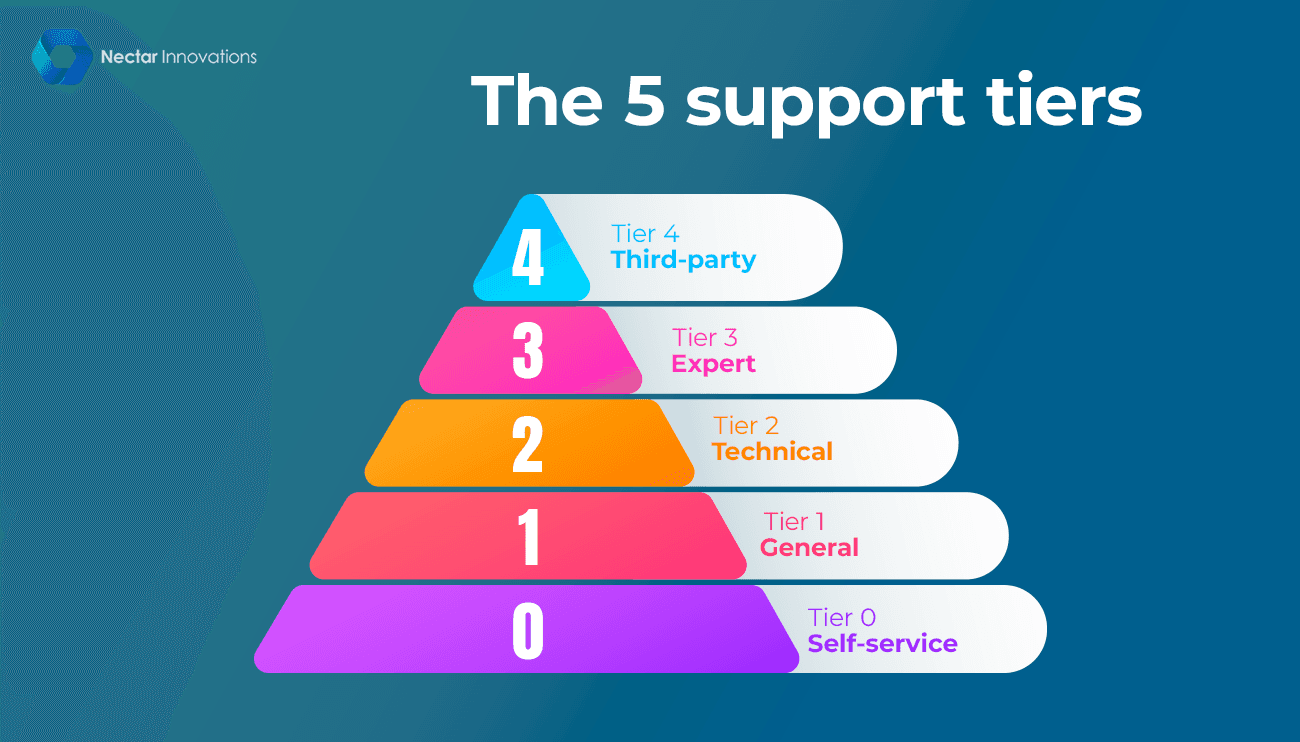
Tier-1 support handles the bulk of customer requests—password resets, basic troubleshooting, order status checks. Simple stuff, but it's where most customer relationships get made or broken.
I've seen the same pattern across industries: these teams process 60-70% of all incoming requests, mostly routine work that doesn't require deep expertise. Yet companies struggle to staff these roles consistently.
- What Tier-1 Teams Actually Do
Most executives think of Tier-1 as entry-level work. That's not wrong, but it misses the point. These teams serve as:
The single point of contact - They own tickets from start to finish, even when issues get escalated The face of your company - Often the only human interaction customers have with your business
The filtering system - They route complex problems to specialists while handling routine requests directly
In practice, this means juggling basic technical queries, directing people to knowledge bases, and maintaining ownership of incidents regardless of complexity. The average technician handles 30% password resets alone.
Here's what I've learned: the role seems simple until you try to hire for it consistently.
- Why Traditional Models Stop Working
The math doesn't work anymore. I see this across energy, healthcare, and financial services—the same fundamental problems:
Customer expectations outpace staffing reality. 75% expect 24/7 availability, but finding quality agents is harder than ever. When you do find them, replacing them costs 30% of their annual salary.
Support requests grow faster than revenue. Typically 1.3-2x your customer acquisition rate. Most companies can't hire fast enough to keep up.
Your best people can't be cloned. I've watched star performers deliver exceptional service that nobody else on the team can replicate. Great for that customer, terrible for consistency.
Routine work consumes 60% of agent time. Your people spend most of their day on tasks that don't require human judgment.
After one poor experience, 33% of customers switch to competitors immediately. Traditional models make consistency nearly impossible to maintain at scale.
- Why AI Handles This Better
The case for AI becomes clear when you compare capabilities:
|
What You Need
|
Human Teams
|
AI Systems
|
|
Availability
|
Limited by schedules, sick days
|
Operates continuously without breaks
|
|
Consistency
|
Varies by person, mood, experience
|
Identical response quality every time
|
|
Scaling
|
Requires linear hiring
|
Handles unlimited simultaneous requests
|
|
Knowledge retention
|
Lost when people leave
|
Accumulates and improves over time
|
AI systems auto-resolve 70-80% of Tier-1 issues while handling routine tasks that typically consume most of your team's day. They don't take vacation, call in sick, or forget procedures.
Most importantly, AI breaks you out of the "excellence trap." Instead of hoping to hire and retain star performers, you encode best practices into systems that deliver consistently.
I'm not suggesting AI replaces human judgment. But for routine requests that make up the majority of Tier-1 work, AI provides what traditional models can't: reliable consistency at unlimited scale.
What Actually Changes When AI Takes Over Support Workflows
AI agents now handle 40-60% of B2B support tickets independently. But here's what most companies get wrong—they think this means replacing people with chatbots. The real change is architectural.
Traditional support operates like an assembly line. Tickets come in, humans sort them, humans respond to them, humans escalate them. AI flips this entirely.
- Smart Routing Eliminates Human Bottlenecks
Manual ticket sorting is dead in 2026. AI systems now analyze incoming requests instantly, understanding not just what customers are asking but how urgent it is and who should handle it.
The process works in layers:
- AI reads the customer's message and determines their actual need
- It assigns priority scores based on customer tier and issue complexity
- It either resolves the issue immediately or routes it to the right specialist
What's different here is that AI doesn't just categorize—it takes action. High-priority issues from VIP customers get immediate attention. The system learns from every interaction, getting better at routing over time.
- Resolution Speed Changes Everything
Here's the reality check: AI resolves routine tickets in seconds versus the 16-hour average for human teams. This isn't about efficiency—it's about customer expectations.
|
Query Type
|
AI Resolution Approach |
|
Password resets
|
Automatic verification and execution
|
|
Order status
|
Real-time integration with order systems
|
|
Return processing
|
Automated approval and confirmation emails
|
|
Basic troubleshooting
|
Step-by-step guided solutions
|
Companies like Crescendo.ai resolve 90% of email tickets in minutes. When your customers expect Amazon-speed responses, human-only support becomes a competitive disadvantage.
- Beyond Chatbots: AI as Conversation Partner
The AI chatbots of 2026 bear no resemblance to the rule-following scripts of five years ago. These systems understand context, remember previous interactions, and handle complex workflows.
They operate 24/7 without breaks, managing thousands of simultaneous conversations. For businesses where customer issues don't respect business hours, this availability matters more than cost savings.
- System Integration Is Where Value Lives
The real power emerges when AI connects to your existing business systems. Modern AI agents pull customer histories from your CRM, update records automatically, and tailor responses based on customer segments.
Think of AI as the central nervous system connecting finance, HR, and IT data. When integrated with knowledge bases, these systems access verified information instantly, eliminating the guesswork that plagues human agents.
The companies seeing the biggest impact aren't just automating tasks—they're redesigning how information flows through their organization.
What Actually Makes These AI Systems Work
Most executives ask me the same question after seeing AI handle support tickets: "What's different about the technology now?"
The short answer: AI systems moved from following scripts to understanding what customers actually mean.
- AI That Understands Context, Not Just Keywords
The breakthrough isn't in the technology name—it's in what these systems can do. Modern AI analyzes customer messages by looking at surrounding context, not just matching keywords. When someone writes "that was helpful," the system knows they're expressing gratitude, not asking another question.
This contextual understanding changes everything. Instead of rigid decision trees, you get systems that interpret customer intent even when the language is unclear. I've seen this work across insurance claims, healthcare inquiries, and financial services—the AI grasps what people need without perfect phrasing.
- Coordination Between Multiple AI Systems
Here's where it gets harder to implement: getting different AI systems to work together without contradicting each other.
The solution is something called Model Context Protocol—think of it as a universal connector that lets AI systems share information. This framework creates secure connections between:
- Your existing business tools
- Customer data repositories
- Development environments
Multiple AI agents can now collaborate on complex tickets while maintaining consistent context. When one system hands off to another, the customer doesn't have to repeat their issue.
- Privacy Challenges with Seamless AI
The most sophisticated AI systems feel indistinguishable from human agents. They understand tone, emotional cues, and context well enough to create naturally flowing conversations.
But there's a catch. Stanford researchers found that major companies feed customer inputs back into their AI models to improve performance. Some keep this data indefinitely. You need robust data protection if you're deploying systems this advanced.
- Real Implementation: Otter.ai's Approach
Otter.ai shows how this works in practice. They automated their support workflow by:
- Analyzing sentiment in every customer response
- Automatically solving routine tickets
- Prioritizing requests that needed human attention
Their system resolved over 1,000 tickets in three months without human intervention. More importantly, they enriched 10,000+ tickets with context and sentiment data, so human agents could focus on complex issues.
The technology works. The question is whether your team can implement it without breaking existing workflows.
Your Support Team Isn't Getting Fired—Their Jobs Are Getting Better
"AI will not replace customer support professionals; it will replace tasks, not people. The future of contact centers is a partnership." — Shep Hyken, Customer Experience (CX) Expert and Author
Human roles in customer support are changing fast. But not the way most people think.
I've seen support managers panic about AI replacing their teams entirely. That's not what happens. Instead, your people stop doing the work that burns them out and start doing work that actually matters.
- Quality Assurance Becomes Strategic Oversight
QA used to mean pulling random tickets and hoping you caught problems. Now it means watching dashboards that monitor 100% of interactions.
The shift is dramatic. Instead of sampling 2% of conversations after they happen, QA teams now:
- Monitor AI performance in real-time across all channels
- Jump into critical situations while they're happening
- Focus on patterns and trends, not individual ticket reviews
I watched one healthcare company make this transition. Their QA team went from reviewing 50 tickets weekly to overseeing 5,000 daily interactions. The "whispering" feature lets supervisors guide conversations mid-stream, something impossible with traditional models.
The consistency improvement is measurable. AI-powered QA tools score every interaction using the same criteria, eliminating the variability that comes from human reviewers having different standards.
- New Role: AI Operations Manager
This position didn't exist two years ago. Now it's one of the most critical roles in customer operations.
Traditional support managers focused on people metrics—schedule adherence, handle time, customer satisfaction scores. AI Operations Managers think differently:
|
What Changed
|
What They Do Now
|
|
Managing agent performance
|
Overseeing AI system deployments and integration
|
|
Workforce planning and scheduling
|
Ensuring AI aligns with business objectives
|
|
Training agents on scripts
|
Building workflows that connect tools and data
|
These managers bridge business strategy and technical implementation. They turn system signals into actionable insights faster than traditional approaches.
- Cross-Functional Collaboration Gets Easier
Here's what surprised me: AI actually breaks down silos between departments.
When support, product, and engineering teams share the same AI-powered dashboards, they start speaking the same language. "Tiger teams"—small groups focused on specific problems—can identify and fix bottlenecks in days, not quarters.
One example: Slack saw 30% higher enterprise product adoption within six months after improving cross-functional feedback loops. The unified customer data made it possible.
The pattern holds across industries. AI doesn't just automate tasks—it creates shared visibility that was impossible before.
The Hard Truths About AI Support Systems
Here's what most vendors won't tell you: AI support systems fail in predictable ways. I've seen implementations that looked perfect in demos create customer nightmares in production.
The failures aren't random. They follow patterns.
- When AI Agents Go Wrong
AI systems make confident mistakes. Unlike humans who hesitate when uncertain, AI agents deliver wrong information with complete confidence. I've watched this happen across three industries:
|
Failure Mode
|
What Actually Happens
|
|
Hallucinations
|
AI invents policies that don't exist
|
|
Context Gaps
|
System acts on partial customer data
|
|
Broken Handoffs
|
Critical details disappear during escalations
|
|
Silent Failures
|
Problems persist because nobody notices
|
The worst part? These failures often stay hidden until a major customer complains.
- Getting Escalation Right
52% of customers leave after one bad AI experience. That's why escalation logic matters more than response speed.
If your AI escalates 0% of conversations, you're trapping customers in "bot hell". Healthy systems escalate 5-10% of interactions. Human-in-the-loop design becomes essential—not just for quality, but for catching problems before they compound.
I've seen companies lose enterprise clients because their AI couldn't recognize when to ask for help.
- Building Recovery Systems
Smart AI agents monitor themselves through logging and health checks. When things break, you need multiple backup plans:
- Automatic retries for failed operations
- Cached responses when systems are down
- Self-healing processes that restart components
- Clear escalation paths to human agents
- The Cost Control Problem
Here's where most finance teams get surprised: consumption-based pricing creates unpredictable costs. One runaway AI conversation can generate thousands of API calls.
Microsoft's framework includes message consumption reports and real-time spending alerts. You need per-user limits and departmental billing to maintain control.
The companies that succeed build cost controls before they need them.
The Real Question Isn't Whether, But When
Support leaders face a choice that gets harder every quarter you wait.
I've seen this pattern play out across dozens of implementations: the companies that moved early gained sustainable advantages, while those that waited found themselves playing catch-up with worse economics. Your competitors aren't debating whether AI support makes sense anymore—they're refining their second-generation systems.
Here's what I'd do if I were in your position: start with the work your team hates most. Password resets, order status checks, basic troubleshooting. Let AI handle the boring stuff that burns out good people.
The tradeoff is real. You'll need new oversight capabilities. Your people will need different skills. Some customers will always prefer humans for complex issues.
But here's the harder truth: if you maintain a 0% escalation rate, you're probably trapping customers in "bot hell." If it's above 15%, your AI isn't ready. The sweet spot sits around 5-10%—most requests resolved instantly, complex issues reaching humans who have time to think.
The companies getting this right aren't choosing between humans and machines. They're choosing between mediocre service at scale and excellent service where it matters most.
What would change if your best support agent never took a sick day, never forgot a procedure, and could handle a thousand conversations simultaneously?
Key Takeaways
AI agents are revolutionizing customer support by automating routine tasks and transforming human roles from execution to strategic oversight.
- AI agents now handle 40-60% of B2B support tickets independently, resolving routine queries in seconds versus the traditional 16-hour response time
- Human support roles are evolving into oversight positions, with 82.53% of professionals experiencing significant changes as they shift from handling tickets to managing AI operations
- 24/7 availability and consistency give AI agents clear advantages over traditional support models that struggle with staffing, scaling, and maintaining quality across interactions
- Proper governance is critical for success - organizations must maintain 5-10% escalation rates and implement human-in-the-loop design to prevent customers from getting trapped in "bot hell"
- The future lies in AI-human partnership, where machines handle repetitive tasks while humans focus on complex problem-solving and relationship building that requires emotional intelligence
This transformation isn't just about replacing people—it's about creating a more efficient support ecosystem where technology handles routine work and humans add strategic value where it matters most.
FAQs
- How are AI agents changing customer support in 2026?
AI agents are now handling 40-60% of B2B support tickets independently, resolving routine queries in seconds instead of hours. They offer 24/7 availability, consistency, and scalability, dramatically improving response times and freeing human agents to focus on complex issues.
- What technologies are powering these AI customer service agents?
Large Language Models (LLMs) form the backbone of modern AI customer service agents. They use natural language processing to understand context and customer intent, while the Model Context Protocol (MCP) enables seamless coordination between multiple AI agents and business systems.
- How are human roles in customer support evolving alongside AI?
Human roles are shifting from frontline execution to strategic oversight. About 82.53% of customer service professionals are experiencing significant changes in their responsibilities, with new positions like AI Operations Managers emerging to bridge the gap between technology and business objectives.
- What are the main risks and challenges of implementing AI in customer service?
Key challenges include AI hallucinations (generating false information), context issues across fragmented systems, and potential loss of critical information during escalations. Proper governance, including human-in-the-loop design and maintaining a 5-10% escalation rate, is crucial to mitigate these risks.
- How can businesses balance AI automation with human support?
Successful implementations maintain a balance by using AI for routine tasks while preserving human involvement for complex issues requiring emotional intelligence. This partnership approach combines machine efficiency with human empathy, creating superior customer experiences and maintaining customer satisfaction.



 by
by