Here's what's actually happening: I've worked with healthcare systems across three regions, and the gap between AI hype and practical implementation is wider than most executives realize. Yes, over 500 AI algorithms have FDA clearance. Yes, the market hit $16.61 billion in 2024. But those numbers don't tell you why most AI pilots stall before reaching production.
I've seen the same pattern in energy, insurance, and healthcare. Organizations that succeed with AI don't start with the biggest, most impressive use cases. They start with specific problems that matter to clinicians on the ground.
In healthcare, that usually means diagnostic accuracy, workflow efficiency, or reducing administrative burden. The systems that work solve real problems doctors face every day. The ones that fail optimize for board presentations.
Here's what I've learned about healthcare AI implementations that actually stick—and why it matters for executives making these decisions right now.
Here's What Actually Works in Clinical AI
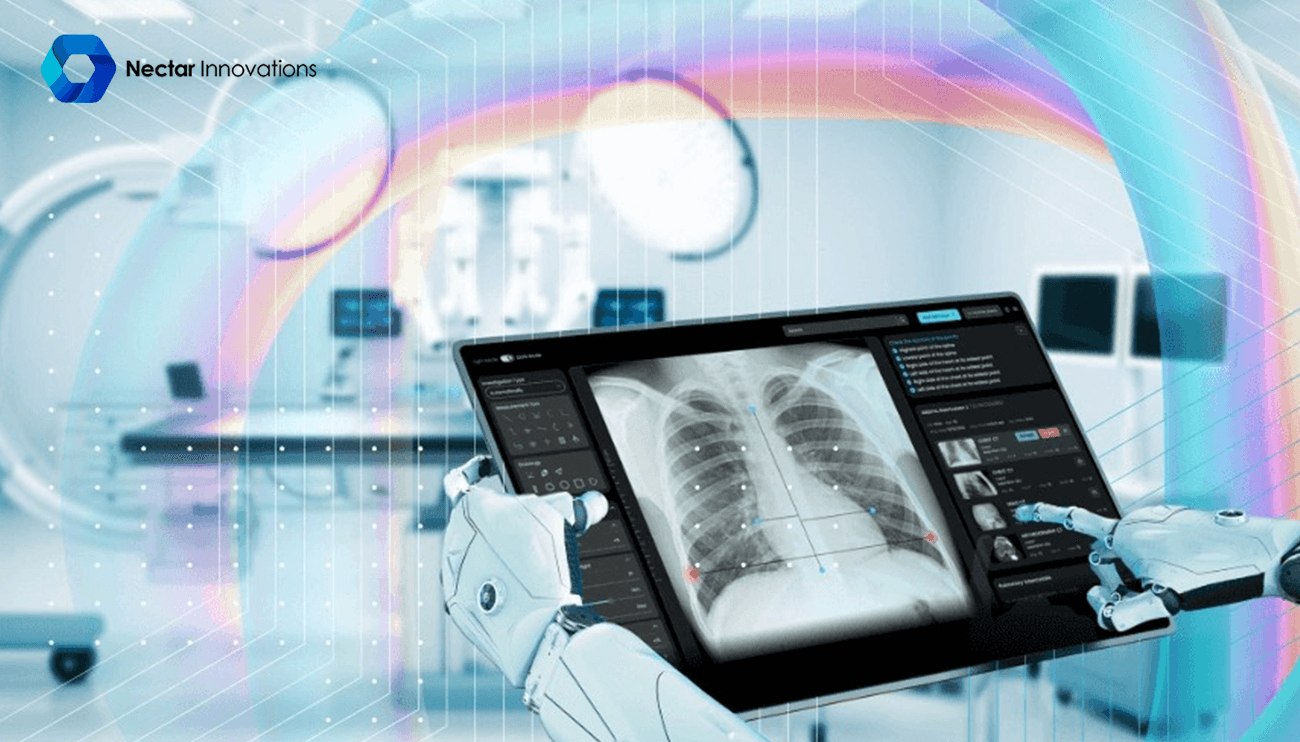
Clinical diagnostics is where healthcare AI stops being theoretical and starts being practical. Three areas consistently deliver measurable results: radiology, pathology, and early disease detection. The question isn't whether these tools work—it's whether your organization can implement them effectively.
- Pattern recognition beats human speed, not human judgment
Radiologists adopted AI faster than any other specialty for a simple reason: the work translates directly to algorithms. Digital images, standardized formats, clear patterns. 48% of European radiologists now use AI tools regularly, up from 20% in 2018.
The numbers tell the story:
- Gastric cancer detection: 99.43% faster diagnosis time
- Prostate biopsy grading: 21.94% faster, with 39% fewer second opinions needed
- 3.6 billion imaging procedures annually, with 97% of that data previously unused
But here's what the efficiency gains miss: AI doesn't replace radiologist judgment. It handles the pattern recognition that consumed their time. One radiologist told me, "I spend less time hunting for abnormalities and more time thinking about what they mean for the patient."
Dr. William Morice at Mayo Clinic puts it plainly: labs now strategically decide when to keep humans in the loop. That's the practical reality—AI as a diagnostic partner, not replacement.
- Early detection where it actually matters
The predictive capabilities matter most when they change treatment decisions. AI systems predict Alzheimer's and kidney disease years before symptoms appear. That's not just interesting—it's actionable.
Here's where the performance numbers justify the investment:
|
Disease Area
|
What AI Does
|
Performance Reality
|
|
Cancer
|
Detects early-stage tumors
|
93.2% accuracy for glioma grading
|
|
Heart Disease
|
Risk assessment
|
85% accuracy predicting outbreaks
|
|
Neurological
|
Spots degeneration patterns
|
85% accuracy in MS progression
|
|
Lung Conditions
|
Analyzes chest imaging
|
92% vs. 78% manual accuracy
|
The CheXNet algorithm for pneumonia detection achieved 86.2% accuracy, outperforming human radiologists. But the real value isn't beating doctors—it's catching cases that would otherwise be missed.Z
- The diagnostic error problem nobody talks about
Diagnostic errors kill more people than most realize. AI addresses this by reducing cognitive biases that trip up even experienced clinicians.
When radiologists use AI assistance for ultrasound reviews, accuracy jumps from 92% to 96%. That 4-point improvement translates to fewer unnecessary biopsies and earlier treatment for real cases.
The specific improvements matter:
- 85% accuracy identifying cancer lesions vs. 75% without AI support
- 96.3% accuracy in pathogen detection from imaging
- AI flags 8% of patients for rare diseases, with 75% confirmed correct
More importantly, clinicians report fewer instances of premature closure and anchoring bias when AI suggestions are available. The technology isn't just faster—it's helping doctors think more systematically.
The pattern I see across health systems: AI works best when it amplifies human strengths rather than trying to replace human judgment. The most successful implementations treat it as a diagnostic partner, not a diagnostic authority.
The Real Question About AI Treatment Decisions
Here's what's actually happening with clinical decision support: the systems that work focus on specific decisions doctors make repeatedly. The ones that fail try to replace physician judgment entirely.
I've seen this play out in three healthcare networks. The successful AI implementations don't promise to make treatment decisions for doctors. They surface patterns in patient data that help clinicians make better choices faster.
- What Clinical Decision Support Actually Delivers
Clinical decision support systems work when they solve a defined problem. In one pulmonary unit, AI flagged deterioration risk 4 hours earlier than traditional warning scores. That gave doctors time to act before patients required intensive care interventions.
The practical benefits show up in measurable ways:
- Physicians spend less time searching through records for relevant patient history
- Medication errors decrease when AI flags potential drug interactions
- Treatment protocols become more consistent across different shifts and providers
- Documentation improves because key decision factors get captured automatically
But here's the tradeoff: these systems require clean, standardized data. If your EMR data quality isn't solid, AI recommendations become unreliable quickly.
"The goal isn't replacing clinical judgment," explains Dr. Juan Rojas, a pulmonary specialist I've worked with. "It's identifying risks and patterns earlier so we can change outcomes before they become critical."
- Where Precision Medicine Gets Practical
Genomic analysis represents the clearest win for AI in treatment planning. Watson's therapy suggestions align with oncologist recommendations in 99% of cancer cases. That's not because AI is making the decisions—it's because it can process genomic markers faster than any human could.
The applications that work focus on specific treatment questions:
|
Problem Area
|
What AI Actually Does |
Real Impact |
|
Drug selection
|
Analyzes genetic markers for medication response
|
Reduces trial-and-error prescribing
|
|
Dosing decisions
|
Factors patient history and demographics
|
Fewer adverse reactions
|
|
Treatment sequencing
|
Compares similar patient outcomes
|
More informed therapy timing
|
This matters most for conditions where personalization makes a measurable difference. Chronic diseases, cancer care, and complex medication regimens see the biggest improvements.
- Monitoring That Actually Changes Care
The best AI monitoring systems focus on one thing: helping doctors adjust treatments based on patient responses. Remote monitoring generates massive amounts of data, but most of it isn't clinically actionable.
The systems that work filter that data down to what matters. Interactive AI models in breast cancer care let patients input their status and predict survival probability with different treatment combinations. Both patients and doctors use those predictions to have more informed conversations about care paths.
AI-powered medication adherence tools like AiCure verify patients are taking prescribed medications correctly. That data feeds back to physicians for treatment plan adjustments.
The key insight: AI works best when it handles the data processing so doctors can focus on patient interaction and clinical reasoning.
The Biggest Workflow Mistake Healthcare Systems Make
Hospital administrators often approach AI workflow automation backwards. They start with the technology, not the bottleneck.
Here's what I see hospitals getting wrong: they implement AI scheduling systems while nurses still can't find available beds. They automate billing while physicians spend two hours on paperwork for every hour with patients. The tech works. The problems persist.
- What Actually Breaks Hospital Operations
Most workflow inefficiencies aren't technology problems—they're visibility problems. AI excels at pattern recognition, which means it can spot operational bottlenecks that humans miss entirely.
The Early Deterioration Index proved this. When implemented properly, it reduced care escalations by 10.4 percentage points. But the key wasn't the algorithm—it was giving nurses and physicians shared visibility into patient status before crisis points.
Smart forecasting follows the same principle. One health system used AI to predict staffing needs and cut temporary labor costs by 50% while boosting productivity by 6%. The technology didn't work harder. It worked smarter by seeing patterns in demand that manual scheduling missed.
The pattern that works:
- Identify the specific operational constraint
- Give AI access to relevant data streams
- Focus on prediction, not automation
- Where Administrative AI Actually Saves Time
Administrative burden consumes 70% of healthcare administrators' time. But not all administrative AI delivers equal value.
|
Task Type
|
Implementation Reality |
Actual Benefit |
|
Appointment scheduling
|
Works 24/7 but requires workflow changes
|
15-minute reduction in transport time
|
|
Clinical documentation
|
Ambient listening reduces note time
|
78% of physicians report faster completion
|
|
Claims processing
|
Automated coding catches errors early
|
20% reduction in denied claims
|
The difference between successful and stalled implementations? Successful ones solve problems physicians already recognize. Failed ones create new workflows that compete with existing habits.
Documentation AI works because doctors hate paperwork. Scheduling AI works when it reduces phone calls. Claims processing AI works because billing errors cost money everyone can see.
with our specialists to discuss customized solutions for your specific workflow challenges.
- Why Compliance AI Finally Makes Sense
Healthcare documentation has always been caught between regulatory requirements and clinical reality. AI doesn't eliminate this tension—it manages it better.
One teaching hospital implemented AI-driven billing compliance and saw denied claims drop by 20%. The system didn't change regulations. It caught coding errors and duplicate claims before they became payment delays.
This matters because compliance failures aren't just about accuracy—they're about cash flow. Real-time anomaly detection means fewer denials, faster payments, and less time spent on appeals.
The key insight: AI compliance tools work when they prevent problems rather than just flag them. They analyze patterns in billing data that would overwhelm human reviewers, catching issues like incorrect coding before claims submission.
These systems support clinical judgment rather than replacing it. The goal isn't eliminating human oversight—it's eliminating human grunt work so staff can focus on decisions that actually require expertise.
Remote Care: Where AI Actually Delivers on Its Promises
Most executives I talk to view remote patient monitoring as either a cost center or a compliance checkbox. That's missing the point.
Here's what's different about AI in remote care: unlike diagnostic AI or workflow automation, remote monitoring systems have clear, measurable outcomes that matter to both clinicians and CFOs. Patient adherence goes up. Readmissions go down. The business case writes itself.
- The monitoring systems that work focus on specific conditions
Cardiovascular AI dominates the US remote monitoring market for a reason—74% market share, compared to 59% for arrhythmia detection and 21% for general vital signs. The successful deployments aren't trying to monitor everything. They're solving specific problems for specific patient populations.
By 2030, projections show 142 million patients using these systems. But here's what most executives don't realize: the technology isn't the bottleneck anymore. The challenge is integrating these alerts into clinical workflows without overwhelming your staff.
AI-powered systems handle the data volume problem that kills traditional remote monitoring programs:
- Pattern detection before symptoms become obvious to patients
- Noise reduction so clinicians see actionable alerts, not data dumps
- Continuous analysis of monitoring data that would require dedicated staff otherwise
- Virtual care extends your clinical capacity
The chronic care management piece is where I see the biggest operational impact. AI-powered virtual assistants handle patient education, medication questions, and routine follow-ups between office visits. This isn't about replacing physicians—it's about extending your clinical team's reach.
One system I worked with uses
AI chatbots for mental health support and initial patient triage. High sensitivity and specificity rates. More importantly, it reduced hospital readmissions while improving patient satisfaction scores.
The key insight: virtual assistants work best when they're handling routine interactions, freeing your clinical staff for cases that actually need human judgment.
These managers bridge business strategy and technical implementation. They turn system signals into actionable insights faster than traditional approaches.
- Smart prompts solve the adherence problem differently
Here's where AI gets practical: medication adherence through personalized nudges. These systems learn from patient behavior patterns—optimal reminder times, message tone, response history. When adherence patterns suggest a patient needs intervention, the system triggers contact with healthcare workers.
Recent research shows flexibility and personalization are critical success factors. Both patients and healthcare workers rate reminder nudges and triggered interventions highly.
What makes this different from basic reminder apps? These AI systems turn passive monitoring into active engagement, prompting action at exactly the right moments.
The question for executives isn't whether remote AI monitoring works—it does. The question is whether your organization can handle the operational changes required to make it stick.
The Three Problems Every Healthcare Executive Faces with AI
Most healthcare AI implementations hit the same roadblocks. I've seen this pattern across different systems: the technology works in pilots, but scaling reveals problems nobody anticipated.
Here's what's actually stopping successful AI adoption in healthcare—and why these aren't just technical challenges you can outsource to your IT team.
- Privacy Isn't Just a Compliance Issue—It's a Business Risk
Healthcare organizations face a fundamental problem with AI: these systems need massive amounts of patient data to work effectively, but current privacy protections aren't designed for AI-era risks.
The numbers are sobering. Algorithms can re-identify 85.6% of adults and 69.8% of children in datasets despite removing identifiers. That's not a theoretical privacy concern—that's a business liability waiting to happen.
I've seen healthcare executives assume their legal team can handle this. They can't. There's no centralized protocol for data encryption and sharing in AI research. Cross-jurisdiction data sharing makes it worse.
This creates real business consequences: workplace discrimination claims, insurance premium disputes, and loss of patient trust. These aren't IT problems. They're executive decisions about acceptable risk.
- Your Staff Isn't Ready (And Neither Are Most AI Systems)
Here's what I don't hear healthcare leaders discussing enough: human oversight remains critical, but most organizations haven't invested in the training to make it effective.
Every large language model studied shows below 50% accuracy in reproducing medical codes. Yet only 17% of healthcare leaders report having AI learning programs.
The gap isn't just training hours. It's role-specific understanding:
- Clinicians need to know when to override AI suggestions
- Administrators need policies for approved tools and data handling
- IT staff need practical instruction on limitations, not just implementation
Most healthcare systems I've worked with treat AI training as a one-time event. It's not. These tools evolve continuously.
- Trust Is Lower Than You Think
Patient trust in healthcare AI sits at 5.38 out of 12. That's a problem, but it's not the biggest one
The bigger issue is physician trust. Without clinical buy-in, your AI investments become expensive pilot programs that never reach full implementation.
I've seen healthcare executives focus on proving ROI to the board while missing the trust-building required at the clinical level. The most successful implementations I've observed started with transparency about what the system can and cannot do.
What would change if you assumed trust needed to be earned gradually, not demonstrated through pilot metrics?
Here's What Actually Changes When You Implement Healthcare AI
Most healthcare AI projects don't fail because of technology. They fail because executives optimize for board presentations instead of clinical workflows.
I've watched dozens of implementations over the past three years. The successful ones share three characteristics: they solve specific problems doctors complain about, they integrate with existing workflows, and they make physicians faster at tasks they already do well.
The unsuccessful ones typically start with the most impressive use case rather than the most practical one.
Yes, AI helps with diagnostics, treatment decisions, and administrative tasks. But the real value isn't in replacing human judgment—it's in removing the friction that keeps physicians from doing their best work.
Here's what surprised me: the healthcare systems that move fastest with AI aren't the ones with the biggest IT budgets or the most tech-savvy leadership. They're the ones that ask their clinicians what's actually broken and start there.
The data privacy concerns are real. The training requirements are substantial. Trust issues won't resolve overnight. These aren't problems you solve with better technology—they require different organizational decisions about how you implement and govern these systems.
But here's the question most healthcare executives aren't asking: What happens if you assume your competitors are already solving these problems while you're still debating whether AI is worth the investment?
The organizations that figure this out first won't just have better patient outcomes. They'll have physicians who actually want to work there.
Key Takeaways
AI automation is revolutionizing healthcare by enhancing diagnostic accuracy, streamlining workflows, and enabling better patient care while supporting rather than replacing physicians.
- AI diagnostic tools reduce interpretation time by up to 99% and increase accuracy from 92% to 96%, helping doctors catch diseases earlier and minimize errors.
- Clinical decision support systems powered by AI help physicians make personalized treatment choices, with 99% agreement rates in cancer therapy recommendations.
- Hospital workflow automation saves $200-360 billion annually by reducing administrative burdens and allowing doctors to focus more on patient care.
- Remote monitoring with AI-powered devices enables proactive chronic care management, with projections showing 142 million patients using these technologies by 2030.
- Success requires addressing data privacy concerns, comprehensive staff training, and building trust among healthcare professionals to ensure responsible AI implementation.
The future of healthcare lies in human-AI collaboration, where technology amplifies physician capabilities while preserving the essential human elements of medical care—empathy, judgment, and contextual understanding.



 by
by