Chatbot costs vary by a lot based on functionality. Ground budgets typically fall into these categories: rule-based chatbots ($2,000-$15,000+), medium-complexity AI assistants ($18,000-$80,000+), generative AI bots ($35,000-$120,000+), and advanced enterprise solutions ($50,000-$250,000+). Most companies choose subscription-based chatbot pricing models and pay between €14-200 monthly for their services.
This detailed piece explores the key factors that affect chatbot development costs. You'll learn about different pricing models and how to measure the true ROI when implementing this technology in your business.
Key Factors That Influence Chatbot Development Cost
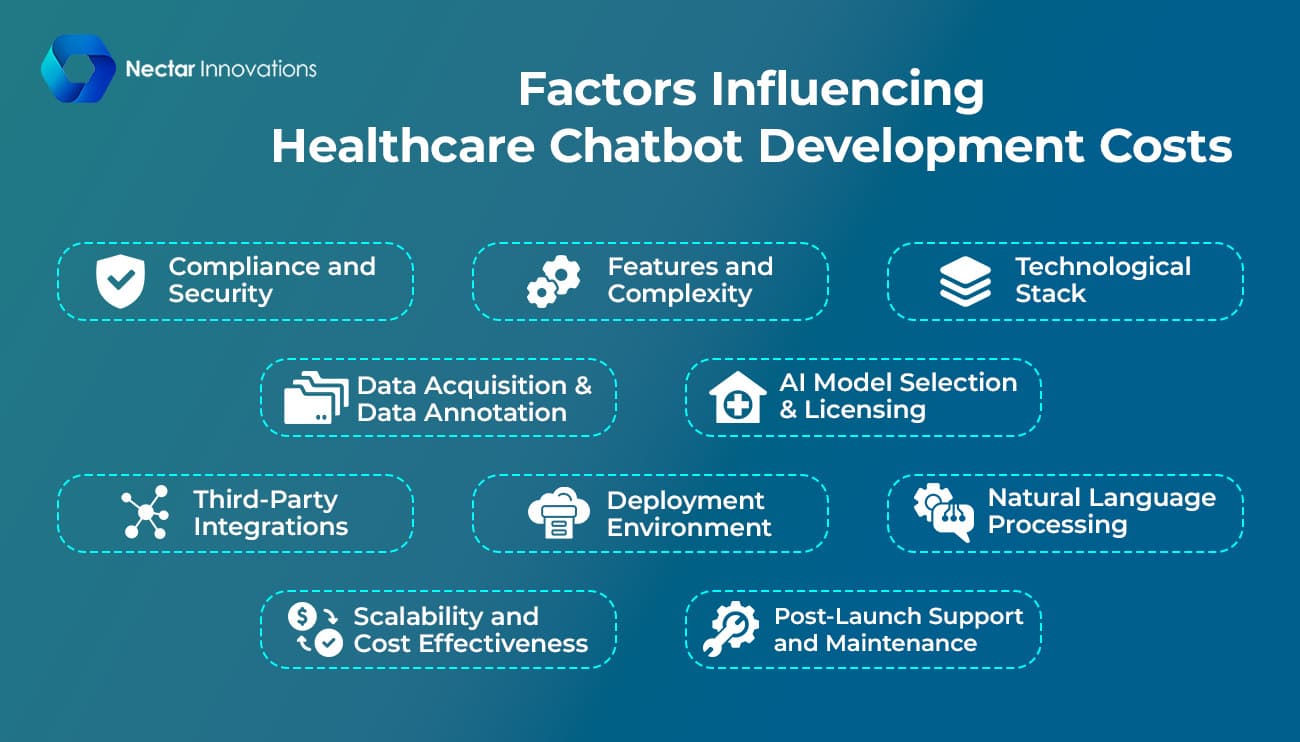
Your chatbot project's final price in 2026 depends on four key factors. These elements will help you plan your budget and steer clear of surprise costs during development and launch.
- AI Complexity: Rule-Based vs. Generative AI
The AI type that powers your chatbot shapes your investment level and results. A more advanced chatbot "brain" means higher development costs.
Rule-based chatbots ($5,000-$30,000) work with predefined decision trees and respond to specific keywords or commands. These solutions handle direct tasks like FAQ answers or booking appointments. They work best for businesses that have predictable customer questions and tight budgets.
AI-powered conversational chatbots ($30,000-$150,000) use natural language processing to grasp user intent, context, and sentiment. They manage complex conversations, learn as they interact, and give personalized responses. Building these requires NLP expertise, data preparation for training, and continuous model improvements.
Generative
AI chatbots ($100,000-$1,000,000+) represent innovative technology in conversational AI. These sophisticated systems use large language models to create human-like conversations and handle various queries. They need substantial investment in model fine-tuning, preventing hallucinations, and responsible AI governance.
Most enterprises see a clear pattern between cost and functionality:
| Chatbot Type |
Development Cost |
Best For |
Key Features |
| Rule-Based |
$5K-$30K |
Basic FAQ, Simple workflows |
Predefined responses, Decision trees |
| AI-Powered |
$30K-$150K |
Customer support, Lead qualification |
NLP, Learning capability, Context awareness |
| Generative AI |
$100K-$1M+ |
Complex problem-solving, Creative content |
Human-like conversations, Advanced reasoning |
- Conversation Design and UX Prototyping
Great chatbot experiences need thoughtful design that combines functionality with natural conversation. Professional designers map user experiences, create dialog flows, and maintain consistent personality. Enterprise chatbots typically need $15,000-$60,000 for complete conversation design.
Creating accessible chatbot interfaces—from embedded widgets to standalone apps or voice experiences—needs specialized design skills. Quality UI/UX development adds $10,000-$40,000 to project costs.
Strong conversational design brings major benefits to AI Customer Agents. Your customers will be happier because natural, accessible conversations improve engagement and satisfaction scores. Well-designed bots can solve more queries on their own, which improves efficiency and reduces costs.
- Platform Choice and Deployment Environment
Your chatbot's home affects its development cost. You can choose between website-based chatbots, mobile apps, or social media platforms like WhatsApp or Facebook Messenger.
Website chatbots integrate directly into your site. They're usually simpler than mobile versions. Mobile app chatbots must work smoothly with
native app interfaces, which often needs extra customization.
Chatbots that work across multiple channels need more programming, testing, and maintenance investment. Supporting them across messaging apps, websites, and mobile platforms requires extra APIs, UI adaptations, and security measures. This increases both development and maintenance costs.
- Integration with CRMs, EHRs, and Payment Systems
Enterprise chatbots must combine smoothly with existing technology systems. Each external system adds new dependencies. Integration can increase expenses by 20% to 50%.
Linking your chatbot to Salesforce, HubSpot, Microsoft Dynamics, or other
CRM platforms enables personal interactions based on customer history. Integration complexity varies but usually costs $10,000-$40,000.
E-commerce chatbots and transactional chatbots need secure payment processing integration. Adding connections to payment systems requires strong security measures and compliance, which costs $15,000-$50,000 more in development.
Healthcare chatbots with EHR integration face unique challenges. Legacy EHR system integration can double development costs. HIPAA-compliant solutions often reach $75,000 or more.
Custom Chatbot Development: In-House vs. Agency
Budget and timeline play crucial roles as you choose between building a chatbot in-house or hiring an agency. Both approaches offer unique advantages and cost structures that affect your final chatbot development expenses.
- In-House Team Roles and Salary Breakdown
You'll need specialists with various skill sets to build an in-house chatbot development team. A detailed team typically requires this annual salary investment:
- Project Manager: ~$88,000 annually
- Chatbot Developer: $90,000–$120,000
- NLP Engineer: $110,000–$140,000
- UI/UX Designer: $80,000–$110,000
- QA Tester: $70,000–$90,000
Chatbot developer salaries can vary significantly. Glassdoor reports an average of $78,060 per year in the United States. Specialized sources show higher ranges up to $131,625 for experienced developers.
Your total annual investment could range from $150,000 for simple implementations to over $800,000 for sophisticated enterprise solutions. You retain control over your chatbot's development process with this approach, but it needs substantial upfront investment.
- Agency Pricing Models: Hourly, Project, Retainer
Chatbot agencies work with three main pricing structures:
- Hourly Rates: Fees range from $50–$200+ per hour. Top-tier agencies charge $150–$300 hourly, while offshore options cost $30–$80 hourly.
- Project-Based Fees: Projects cost between $15,000–$300,000+ based on chatbot complexity. Here's a breakdown:
• Rule-Based Chatbots: $15,000–$30,000
• AI Chatbots: $75,000–$150,000+
• Generative AI Chatbots: $150,000+ - Retainer Model: Monthly fees start at $5,000+ for ongoing maintenance and support. Retainer agreements work best for projects with uneven workloads or those needing consistent optimization.
Small businesses with basic needs might find freelance chatbot developers more affordable, with rates typically between $30–$60 per hour.
- Pros and Cons of Each Approach
In-House Development Advantages:
- You control development and customization fully
- Your company's ownership policies line up directly
- Staff members develop valuable skills
- Data security stays under your control
In-House Development Disadvantages:
- You need significant upfront investment for talent
- Finding specialized expertise can be challenging
- Projects take longer to complete
- Long-term maintenance costs often exceed predictions
Agency Development Advantages:
- Pre-assembled expert teams deliver faster results
- You get access to specialists across multiple domains
- Simple projects often cost less
- Services extend beyond just development
- Teams scope projects efficiently from experience
Agency Development Disadvantages:
- Complex, custom solutions might cost more
- Development processes stay with the agency
- Future changes might depend on agency availability
Many businesses find success with a hybrid model. They keep core expertise in-house while bringing in external specialists for specific components. This balanced approach typically costs between $50,000–$500,000.
Let our experts help you choose the right approach for your business. to get a customized recommendation based on your specific needs.
Chatbot-as-a-Service Pricing for Different Business Sizes
Chatbot services with subscription-based models provide a budget-friendly entry point compared to custom development. Their pricing tiers adapt to different organizational needs. The cost of chatbot-as-a-service in 2026 varies based on business size, conversation volume, and feature requirements.
- Solopreneurs and Freelancers: €0–30/month
Independent professionals with tight budgets can expect to pay between €0-30 monthly. These starter plans support simple automation needs and limited monthly conversations.
Typical needs for solopreneurs include:
- Simple chat widget functionality
- Simple automation workflows
- Support for 50-200 monthly conversations
You'll find several budget-friendly options in this category. Boei delivers full AI chatbot capabilities with WhatsApp integration at €14/month. Tidio and Crisp have free tiers with simple features and conversation limits. Most platforms in this price range include:
- Up to 50-100 billable conversations
- 2-10 team seats
- Simple analytics dashboards
- Limited AI capabilities
Solo entrepreneurs should stay away from per-conversation pricing models. These can become expensive even with low volumes. A Shopify store owner handling about 100 conversations monthly spends €14/month with Boei. Alternative solutions requiring separate WhatsApp add-ons cost €88/month.
- SMBs and Mid-Market: €50–500/month
Small and medium businesses invest between €50-500 monthly for more resilient chatbot solutions. This price range gives access to advanced features needed by growing teams that manage 200-5,000 monthly conversations.
Mid-market chatbot features generally include:
- AI-powered conversation capabilities
- Multiple communication channels
- Team collaboration tools
- CRM and helpdesk integrations
Growing companies need to watch out for per-seat pricing models. These multiply costs as teams expand. Per-conversation fees can also blow up budgets at this volume – 3,000 conversations through certain platforms could lead to nearly €3,000 in extra charges.
Popular options in this tier include:
- Boei Business (€99/month): 10,000 AI messages with priority support
- Tidio Growth (€59/month plus AI add-ons): Advanced e-commerce features
- Intercom Starter (€74/seat): Detailed but pricier
Mid-market companies need chatbots that handle 1,000-5,000 monthly conversations with advanced AI capabilities, analytics, and multiple integrations. A software company with 8 support agents handling 3,000 conversations monthly saves money with Boei's Business plan at €99/month compared to Intercom at €592/month plus AI usage fees.
- Enterprise Plans: €1,000–5,000+/month
Enterprise-grade chatbot solutions start at €1,000 and often go beyond €5,000 monthly. These plans serve large organizations that need sophisticated capabilities, compliance features, and extensive support.
Enterprise requirements typically include:
- Custom AI training capabilities
- Dedicated technical support
- Service level agreements (SLAs)
- Advanced security and compliance features
Leading enterprise solutions include platforms like:
- Intercom: Advanced AI but costly
- Drift: B2B sales focus starting at $2,500/month
- Ada: Complex workflow support at approximately $30,000+/year
Enterprise chatbot pricing models often come with implementation costs from €10,000-50,000 on top of the monthly subscription. Large businesses should factor in these one-time expenses when calculating total ownership costs.
Multi-language support, deep integrations, advanced analytics, and strict security standards come with enterprise plans from vendors like Intercom, Drift, and Zendesk. These platforms include onboarding assistance, dedicated account management, and guaranteed service level agreements.
Choosing the right pricing tier depends on several factors:
- Monthly conversation volume
- Required AI capabilities
- Number of team members needing access
- Integration requirements
Need help finding the right chatbot pricing tier for your business? with our experts to assess your specific requirements and identify the most budget-friendly solution for your organization.
Hidden Costs in Chatbot Projects You Should Plan For
Chatbot projects come with several hidden expenses that can affect your total investment beyond the basic subscription or development costs. You need accurate budgeting to avoid unexpected financial surprises.
- AI Message Overage Fees
Most chatbot platforms give you a set number of AI-powered conversations in their monthly plans. Extra charges kick in once you go over this limit, usually €0.50 to €2.00 per message. These fees add up faster during traffic spikes - a viral marketing campaign could lead to €500+ in unexpected charges.
The pricing models for overages are quite different:
- Per-conversation fees: Some platforms charge €10.00 for every additional 1,000 conversations
- Usage-based billing: Costs go up as you use more, often at premium rates
- AI resolution charges: Platforms like Intercom charge €0.99 per AI-resolved conversation
You can avoid budget surprises by choosing platforms with flat-rate pricing or setting up usage monitoring systems that warn you before hitting limits.
- Channel Add-Ons (WhatsApp, SMS)
Adding popular messaging channels can get pricey. These add-ons can turn a €39/month service into a €140+ monthly investment.
Common channel add-on costs include:
| Platform |
WhatsApp Add-on |
SMS Add-on |
Other Channels |
| Tidio |
€59/month |
Varies |
- |
| Intercom |
€99/month |
€29/month |
Phone: €29/month |
| LiveChat |
€49/month |
Varies |
- |
WhatsApp costs go beyond platform fees. Meta charges for each template message you send, with rates that change based on message type and where the recipient is located. Businesses must also complete 10DLC registration with a one-time €20 setup fee and monthly fees starting at €2.
- Implementation and Training Costs
Enterprise chatbot setup often needs professional services that cost more than subscriptions. These expenses range from €100 to €10,000 based on your business size and setup complexity.
Here's what implementation usually costs:
- Professional services fees: €2,000-10,000 for Intercom, €5,000-20,000 for Zendesk, and €10,000-50,000 for Ada
- Data migration costs: Moving existing knowledge bases and conversation history
- Technical configuration: System integration can add 20–50% to overall costs
- Training: Teaching staff how to use and manage the platform
Self-service platforms with quick setup can help reduce these expenses.
- Data Storage and Export Fees
Data management costs often stay hidden until you need them. They can become big operational expenses later.
Here are the key data-related costs to think about:
- Storage duration: Extra charges apply for keeping chat data beyond standard periods
- Backup systems: You need redundant storage systems for critical conversation data
- Export capabilities: Some platforms limit data portability unless you pay premium fees
- Compliance requirements: Healthcare providers pay €2,000-4,000 monthly for HIPAA-compliant storage compared to standard €500-1,000 plans
Annual maintenance takes up 15-25% of your original development investment. This covers updates needed when company policies, pricing, product features, processes, or FAQs change - your chatbot's rules and automation flows must adapt accordingly.
The real cost of owning a chatbot goes well beyond the advertised price. Knowing these hidden expenses helps you budget better and avoid costly surprises throughout your chatbot's lifecycle.
How to Calculate Chatbot ROI and Payback Period
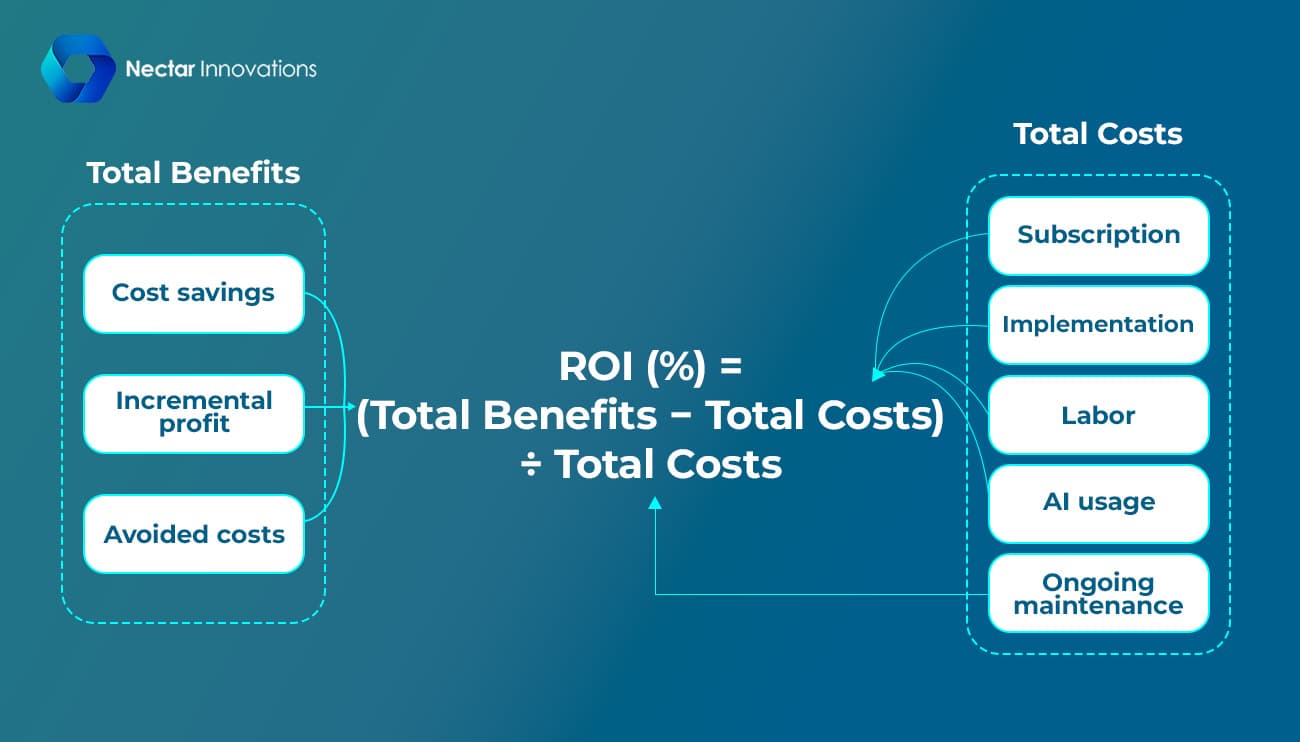
The right calculation of return on investment (ROI) helps justify your chatbot's price tag and prove its business value. Chatbot ROI compares financial benefits against implementation costs. Positive figures show that your investment makes sense.
- Monthly ROI Formula: Time + Leads – Cost
The simplest formula for chatbot ROI is: ROI (%) = (Total Benefits – Total Costs) ÷ Total Costs × 100
Your monthly ROI calculation involves these four steps:
- Identify eligible queries that a chatbot could resolve (typically 80% of queries represent 20% of query types)
- Calculate agent time spent on these eligible conversations
- Convert to dollars monthly using this formula:
• Monthly savings = monthly_contacts × containment_rate × cost_per_contact
• Revenue uplift = incremental_conversions × gross_profit_per_conversion
• Net monthly benefit = (savings + revenue) – monthly_costs - Calculate payback period = one_time_implementation_cost ÷ net_monthly_benefit
To cite an instance, a business handling 3,000 monthly conversations could save $10,000 monthly when 2,000 conversations move to their chatbot (at $5 per human-handled interaction).
- Cost per Resolution vs. Human Agent Salary
AI solutions offer remarkable cost advantages compared to human agents. This difference builds the strongest business case for chatbot adoption:
| Resolution Method |
Cost per Interaction |
Monthly Cost (50,000 interactions) |
| Human Agents |
$6.00 |
$300,000 |
| AI Chatbots |
$0.50 |
$25,000 |
| Pay-as-you-go AI |
$0.01-0.10 |
$500-5,000 |
Human phone agents cost between $0.42-1.08 per minute, while AI solutions range from $0.09-0.29 per minute. The cost difference per resolution tells a similar story:
- Human agent: $5.00-$15.00 per resolved inquiry
- AI chatbot: $0.25-$2.00 per resolved inquiry
- AI voice agent: $1.00-$5.00 per resolved inquiry
These calculations assume efficient operations and consider AI's limitations when handling complex cases that need human escalation.
- Automation Rate and CSAT Impact
Your chatbot's ROI depends heavily on two metrics:
Containment Rate (bot-resolved ÷ total chatbot conversations) measures automation effectiveness. Higher rates relate directly to cost savings. Most businesses should target:
- Original deployment: 40-50% containment
- Mature implementation: 60-70% containment
A well-implemented chatbot handles up to 80% of repetitive tasks, especially when backend system integration enables complete ticket resolution without human intervention.
Customer Satisfaction Impact affects revenue directly. Each 1-point CSAT improvement relates to approximately 0.04% revenue increase. The benefits include:
- 37% reduction in first response times/li>
- 52% faster ticket resolution
- 23% increased conversion rates through guided customer experiences
Want to learn about your specific chatbot ROI potential? with our experts to assess your support volume and automation opportunities.
Industry-Specific Chatbot Pricing Benchmarks
The cost of AI chatbots varies by industry based on compliance needs, integration complexity, and specialized features. Here's a breakdown of the expected costs to implement AI chatbots in three major sectors by 2026.
- Healthcare: $50K–$100K+ with HIPAA
Healthcare chatbots start at $50,000 and can reach beyond $100,000 because of strict HIPAA compliance requirements. Patient data security and EHR system integration are crucial components. Smaller clinics that need basic features like appointment scheduling and FAQs can expect to pay $20,000 to $40,000.
The main cost factors are:
- HIPAA-compliant data storage ($2,000-$4,000 monthly compared to standard $500-$1,000)
- EHR system integration (adds 25-40% to development costs)
- Advanced NLP to interpret medical terminology accurately
Small practices can access HIPAA-compliant solutions at $39/month with signed Business Associate Agreements.
- Finance: $75K+ with Fraud Detection
Financial sector chatbots start at $75,000 for basic security features. Banking solutions require significant investment, with costs between $100,000 to $500,000+ for complete implementations.
These costs stem from:
- Multi-factor authentication and fraud detection systems
- Regulatory compliance (adds 30-50% to costs)
- Transaction security protocols for payment handling
- Core banking system integrations
Banks can start with a $50,000 pilot program, but enterprise solutions often reach $1 million after including compliance, hosting, and optimization costs.
- Retail: $25K–$50K with Product Recommendations
Retail and e-commerce chatbots are more budget-friendly, with prices between $25,000 to $50,000. These tools boost sales through customized recommendations and enhanced customer experience.
Retail chatbots need:
- Product catalog integration
- Inventory and payment system connections
- Personalization engines
- Order tracking capabilities
E-commerce solutions cost 10-20% more than standard chatbots due to extra integrations with inventory, payment, and shipping systems.
| Industry |
Starting Price |
Key Cost Drivers |
| Healthcare |
$50K-$100K+ |
HIPAA compliance, EHR integration |
| Finance |
$75K+ |
Fraud detection, security, regulatory compliance |
| Retail |
$25K-$50K |
Product recommendations, payment processing |
Conclusion
AI chatbot costs range from $5,000 to over $1 million based on complexity, functionality, and industry needs. This piece reviews what drives these costs and gives real-life measures to help you budget wisely. Most companies see a 40-60% drop in customer service costs after implementing chatbots. These savings make them worth the upfront investment.
Here's what you need to know about chatbot costs:
- AI complexity drives pricing—basic rule-based systems start at $5,000 while advanced generative AI solutions can exceed $1 million
- Your choice between in-house or agency development alters both original and ongoing costs
- AI message overages, channel add-ons, and setup services might double your planned budget
- Your ROI calculations should include both savings and new revenue potential
Subscription models are available to businesses of all sizes. Small business owners can start at €14/month, while larger companies might pay over €5,000 monthly. Special requirements like HIPAA compliance for healthcare or fraud detection in finance can push implementation costs higher.
You should review your business needs and expected chat volumes before investing in a chatbot. Use our ROI formulas to prove the value of your investment. Better customer satisfaction and higher conversion rates add to the immediate cost savings.
Need help picking the right chatbot for your budget and business? with our experts to review your needs. We'll help create a strategy that works for your budget and gets the best results.
Key Takeaways
Understanding AI chatbot pricing in 2026 helps businesses make informed investment decisions that balance functionality with budget constraints while maximizing return on investment.
- AI chatbot costs range from $5,000 to $1M+ depending on complexity—rule-based systems start at $5K while generative AI solutions can exceed $1M for enterprise implementations.
- Subscription models offer accessible entry points with pricing tiers from €14/month for solopreneurs to €5,000+/month for enterprise solutions based on conversation volume and features.
- Hidden costs can double your budget through AI message overages (€0.50-€2.00 per extra message), channel add-ons (€59+/month for WhatsApp), and implementation fees (€2K-€50K).
- ROI calculation is essential for justification—chatbots reduce customer service costs by 40-60% with human agents costing $6 per interaction versus AI at $0.50 per interaction.
- Industry compliance drives premium pricing—healthcare chatbots cost $50K-$100K+ for HIPAA compliance while finance solutions start at $75K+ for fraud detection capabilities.
The key to successful chatbot implementation lies in accurately calculating your specific ROI potential, accounting for hidden costs, and choosing the right development approach that aligns with your business size and technical requirements.



 by
by ![AI Chatbot Pricing 2026: Real Enterprise Costs Revealed [With Data]](/_next/image?url=%2Fassets%2Fimage%2Fblog%2Fai-chatbot-pricing-2026-real-enterprise-costs-revealed.jpg&w=1920&q=75)