What Are Voice Agents and Chatbots?
Voice agents and conversational AI chatbots are two different ways to automate customer support. Each has its own strengths and ideal uses.
- Definition of Voice Agents in Customer Support
Voice
AI agents are smart systems that use artificial intelligence to understand and respond to human speech. They're different from old IVR systems that need keypad inputs or follow fixed menus. These AI assistants participate in natural conversations. They can answer questions, give information, and help customers through phone calls that sound almost human.
Voice agents work by using several technologies at once:
- Speech recognition turns customer speech into text
- Natural language processing understands what customers want
- Machine learning algorithms make responses better over time
- Text-to-speech creates natural-sounding voice responses
Voice agents can also pick up emotional signals like tone, urgency, and hesitation - something text systems can't do.
- What Makes a Chatbot Conversational AI?
A simple chatbot is a program that simulates conversation through text. But not all chatbots are conversational AI. Traditional chatbots use predefined scripts with "if/then" logic and keyword matching. They work well for simple, predictable tasks but struggle with complex questions.
Conversational
AI chatbots are different. They use advanced NLP, machine learning, and sometimes generative AI. This helps them understand context, handle complex conversations, and learn from past chats. So they can understand what users mean beyond just keywords, keep track of conversation context, and respond more naturally.
- Difference Between Chatbot and Conversational AI
Intelligence and adaptability set them apart. Simple chatbots follow strict scripts, but conversational AI (text or voice) understands context, processes natural language, and gets better with time. Voice agents are particularly good at spotting subtle emotional cues. They handle complex conversations and provide customized, empathetic responses.
How They Work: Capabilities and Limitations
AI voice agents and chatbots need strong technical foundations to work well with customers. These foundations are the mechanisms that reveal what these systems can and cannot do.
- Natural Language Processing and Intent Recognition
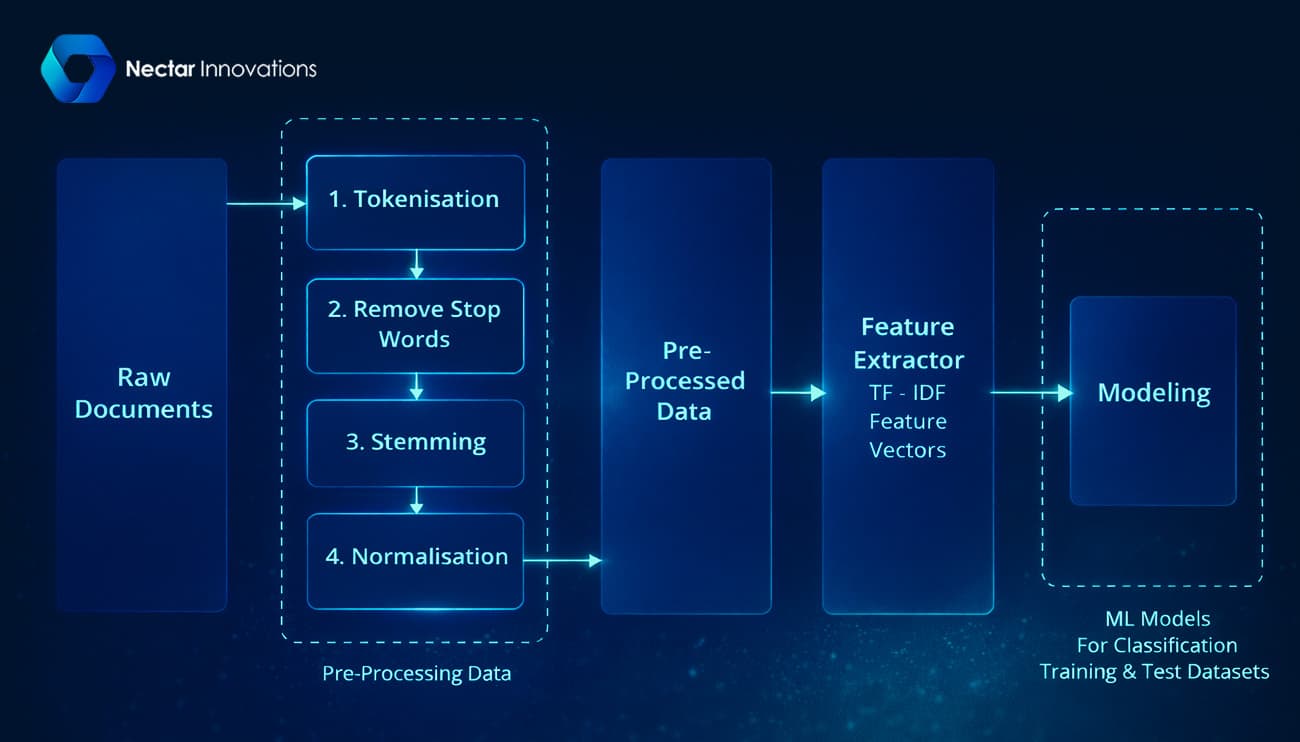
Both technologies use Natural Language Processing (NLP) to understand what customers say, though their capabilities differ. Voice agents face an extra challenge - they must turn speech into text through Automatic Speech Recognition before using NLP. This two-step process affects accuracy. A system with 95% accurate speech recognition and 98% accurate NLP will achieve 93.1% overall accuracy.
The system's ability to understand what customers want from their first interaction shapes user satisfaction. Research shows customers are 4 times more likely to abandon conversations if the system misunderstands their initial request.
- Handling Multi-Step Queries and Context Retention
Advanced AI agents shine where basic chatbots fall short - they remember conversation details over time.
Voice agents with memory capabilities can handle complex discussions without asking customers to repeat themselves.
Basic chatbots often forget previous messages and create frustrating loops during multi-step tasks. A customer discussing a billing dispute across multiple accounts or asking unique technical questions might find themselves stuck in circles.
- Escalation to Human Agents: Smoothness and Accuracy
Smart escalation to human agents helps customers. The system should pass along the full conversation history when AI cannot solve an issue confidently.
A well-laid-out escalation plan accounts for agent availability, working hours, and urgent requests. The best systems detect customer frustration through sentiment analysis and quickly connect them with human agents.
Want to find the right AI support solution for your business? with our specialists to explore what works best for you.
When to Use Voice Agents vs Chatbots
Making a choice between conversational AI and chatbots comes down to understanding what each does best. Here's a practical guide to help you pick the right technology that fits your needs.
- Best Use Cases for Chatbots: FAQs, Order Tracking, Resets
Standard chatbots shine at handling routine, structured interactions with clear patterns. We used chatbots successfully for:
- FAQ resolution: Chatbots quickly answer common questions about products, services, and policies
- Order tracking: 90% of online shoppers just need tracking updates, which chatbots deliver instantly
- Password resets: Automated password management cuts IT department workload and maintains security policies
These automated tools help businesses save up to 30% on their customer support costs.
- When Voice AI Wins: Complex, High-Stakes Conversations
Voice remains the most human and emotionally rich channel in customer experience. Voice agents work best when:
- Conversations involve multiple steps or context switching
- Issues call for emotional intelligence or empathy
- Questions need complex problem-solving
Voice agents handle complex questions well. They understand natural language and figure out what each caller really wants. They excel at high-value interactions where tone and emotional cues matter. Customers get their questions answered within 41 seconds 78% of the time.
- Hybrid Model: Combining Speed and Empathy
The best support strategy uses both technologies together. Smart escalation lets chatbots handle the original questions before naturally moving to voice agents when needed. This approach gives you:
- 24/7 availability for routine questions
- Human-like interactions for complex issues
- Contextual handoffs that keep conversation history
Want to find the right mix for your business? with our specialists to explore your options.
Customer Preferences and Industry Trends
Customer service preferences for conversational AI and chatbots vary significantly across generations. Let's get into who wants what and how these technologies affect different service areas.
- Generational Preferences: Gen Z vs Baby Boomers
Young consumers accept new ideas about AI with open arms—82% of Gen Z uses AI at work, while only 52% of Baby Boomers do the same. Gen Z might be digital natives, but 70% of them still choose phone calls to solve complex problems, which is similar to what older generations prefer.
People aged 18-44 show twice the likelihood of choosing AI over humans for most support needs compared to those 45 and older. In spite of that, 81.4% of Gen Z wants a real person when they need banking help.
- Industry-Specific Use: E-commerce vs Healthcare
E-commerce makes use of conversational AI mostly to update order status—"Where is my order?" makes up 40% of customer questions. The market has seen voice commerce transactions jump from $4.6 billion in 2021 to $19.4 billion in 2023.
Healthcare has seen voice agents work remarkably well. A voice bot helped one urgent care provider cut daily calls by 40% by moving them to SMS messaging. This change earned them a 4.9-star review rating.
- Future of Support: Will Chatbots Replace Voice?
Research shows the voice AI market should grow more than three times between 2025 and 2030, reaching $34 billion. Venture capital firms showed their confidence by investing $6.6 billion in voice AI startups in 2025.
The future points to integration rather than replacement—75% of customers still want human help with complex issues.
Conclusion
Voice agents and chatbots each shine in their own way - it's not about which technology is better overall, but how they serve different customer needs. Voice agents excel at handling complex, emotionally charged conversations. Their 4.2/5 customer satisfaction rating and ability to resolve 78% of complex issues on first contact prove this. Chatbots shine at quick responses for simple questions about FAQs and order tracking. Businesses can save up to 30% on support costs with them.
Smart organizations use both technologies together to get the best results. This approach lets them automate routine questions through chatbots and save voice agents for situations that need emotional intelligence and complex problem-solving. Modern customers get exactly what they want - efficient yet empathetic support.
Customer behavior supports this balanced approach. While younger people feel more comfortable with AI, 70% of Gen Z still picks up the phone for complex issues. Different industries use these tools in unique ways. E-commerce focuses on order updates while healthcare uses voice agents to cut down calls and make patients happier.
Integration, not replacement, shapes the future. Experts expect the voice AI market to triple by 2030. Companies should look at their customer demographics, industry needs, and support complexity to find the right mix. Want to know which solution fits your support needs? Nectar Innovations specialists can help you explore options tailored to your business.
The key to success isn't choosing between voice agents and chatbots. Companies win when they use both technologies wisely based on their strengths. This customer-focused strategy delivers the quick, efficient, and personal support that today's consumers expect.
Key Takeaways
Understanding the strengths and limitations of voice agents versus chatbots helps businesses create more effective customer support strategies that balance automation with human connection.
- Voice agents excel at complex, emotional conversations with 4.2/5 satisfaction ratings and 78% first-call resolution for difficult issues
- Chatbots work best for routine tasks like FAQs and order tracking, delivering up to 30% cost savings on support operations
- Hybrid approaches combining both technologies provide 24/7 availability for simple queries while preserving human-like interactions for complex problems
- Customer preferences vary by generation, but 70% of all age groups still prefer voice calls for resolving complex issues
- The future favors integration over replacement, with voice AI market expected to triple by 2030 as businesses seek balanced solutions
The most successful customer support strategies don't choose between these technologies but strategically deploy each where they perform best, creating seamless experiences that meet diverse customer needs and expectations.



 by
by ![Voice Agents vs Chatbots: A Clear Guide for Customer Support [2026]](/_next/image?url=%2Fassets%2Fimage%2Fblog%2Fvoice-agents-vs-chatbots-a-clear-guide-for-customer-support.jpg&w=1920&q=75)