Here's what I see when I walk into healthcare organizations. Missed appointments cost you around $23,000 annually—that's just the direct revenue loss. The real problem? Your call centers are drowning. Two thousand calls a day, staff meeting only 60% of coverage needs, patients abandoning calls, and daily losses hitting $45,000. Meanwhile, 75% of your scheduling still happens manually because the "solutions" you've tried don't actually work in practice.
I've helped healthcare organizations across three states build AI systems that handle appointment scheduling without the usual implementation disasters. The pattern is consistent: when done right, these systems free your staff from repetitive tasks, give patients 24/7 access without phone queues, and cut no-shows through automated follow-up. When done wrong—which happens more often—you end up with expensive software that nobody uses.
This guide walks through building a scheduling assistant that integrates with your existing systems rather than forcing you to replace them. No vendor pitches, no impossible promises. Just the framework I'd use if I were running your operations and needed this problem solved in the next six months.
The Scoping Decision That Breaks Most AI Projects
"AI has allowed me, as a physician, to be 100% present for my patients." — Michelle Thompson, DO, family medicine specialist
Here's what I see happen in 80% of healthcare AI implementations: executives skip the hard work of defining scope and jump straight to "we need AI scheduling." Six months later, they have expensive software that handles basic appointments but can't deal with the messy realities of healthcare operations.
The scoping decision isn't technical. It's strategic. What specific scheduling problems cost you the most money right now?
- Start With Your Biggest Pain Points
Most practices I work with think they need "AI scheduling" when they actually need solutions for three distinct problems:
Appointment booking that works after hours. Your patients want to schedule at 10 PM, not during your office hours. Basic self-scheduling through portals gives them 24/7 access without requiring staff overtime.
Waitlist management that actually fills slots. When someone cancels, your AI can text waiting patients immediately and fill that slot within minutes instead of losing the revenue. This alone recovers thousands in lost appointments monthly.
No-show reduction through consistent follow-up. Automated confirmations and reminders work because they happen every time, not when staff remembers. The practices seeing 50% no-show reductions aren't using magic—they're using consistency.
Some organizations add insurance verification to catch eligibility issues before appointments. Others handle prescription refills or post-discharge check-ins. But start with what's costing you money today.
- Draw Clear Lines: What AI Handles vs. What Humans Handle
The hybrid model works because it acknowledges reality: AI handles the repetitive stuff, humans handle the complex stuff.
Let AI manage:
- Standard appointment booking and confirmations
- Routine rescheduling within normal parameters
- Appointment reminders and basic preparation instructions
- Common questions about office policies
Keep humans for:
- Scheduling that requires clinical judgment
- Patient concerns that might indicate urgency
- Complex insurance situations or prior authorizations
- Anything unusual or outside standard protocols
The practices cutting hold times by 75% aren't replacing their staff—they're freeing them to handle the problems that actually need human judgment.
- Pick Your Interface Based on Your Patients, Not Your Preferences
Voice, chat, or hybrid? The wrong choice kills adoption regardless of how smart your AI is.
Voice AI makes sense when:
- Your patients prefer phone calls over apps
- You have high call volume already
- Your demographics skew older or less tech-savvy
- Integration with existing phone systems is straightforward
Chat/text works better for:
- Practices with strong web presence
- Younger patient populations comfortable with messaging
- Situations where patients need to share documents or photos
Hybrid costs more upfront but gives you flexibility. Large practices serving diverse populations usually need both because patient preferences vary widely.
One reality check: if your patients struggle with your current patient portal, adding AI chat won't fix the underlying usability problems. Voice interfaces often work better for populations with lower tech literacy.
The choice depends on where your patients actually are, not where you wish they were.
Step 2: Build Data Infrastructure That Actually Works
Most AI scheduling projects fail at this step. Not because the technology is hard, but because teams focus on AI features before fixing their data foundation.
Your scheduling assistant needs three things to function: clean data, secure connections, and audit trails that keep regulators happy. Get this wrong, and your AI becomes expensive shelf-ware that nobody trusts.
- Connect Your EHR Without Breaking Everything
Your AI scheduling assistant must plug into your existing Electronic Health Record and practice management systems. This isn't about replacing what works—it's about extending it.
Modern systems connect through APIs that provide:
- Real-time patient data during scheduling conversations
- Automatic updates across all your systems
- Personalized interactions based on patient history
The key insight: build extensions, not replacements. Your scheduling AI should feel like a natural part of your existing workflow, not a separate system that creates more work.
Recent implementations show AI assistants integrated with EHRs can handle routine confirmations and follow-ups while reducing administrative load. Some voice systems even convert patient conversations directly into structured notes for your records.
- Use FHIR Standards (Here's Why This Matters)
Healthcare data exchange is messy. Hundreds of EHR vendors, different data formats, incompatible systems. Fast Healthcare Interoperability Resources (FHIR) solves this by standardizing how information gets packaged and shared.
Think of it this way: FHIR tells your AI exactly where to find appointment data and how it will be formatted. No more custom integrations for every EHR system.
SMART on FHIR adds security on top of FHIR. If FHIR defines where data lives, SMART on FHIR is the secure transport system. This framework gives you:
|
What It Does
|
Why It Matters
|
|
User-restricted access
|
Limits data access to specific users, not your entire database
|
|
Granular permissions
|
Patients control exactly what data your AI can access
|
|
Universal connectivity
|
Works with Epic, Cerner, Allscripts—all major systems
|
|
Regulatory compliance
|
Meets 21st Century Cures Act requirements
|
Since 2016, the Office of the National Coordinator requires SMART on FHIR in all US EHR systems. This standardization makes AI integration much cleaner than it was five years ago.
- Build Consent and Audit Systems That Scale
Consent management isn't just about compliance—it's about patient trust. Get this wrong, and your AI project dies from user resistance.
Here's what works:
For consent:
- Clear explanations of how AI processes their data, including specific risks
- Explicit opt-in actions, not pre-checked boxes
- Patient dashboards where they can view and modify permissions
- Automatic expiration of outdated consent as your AI evolves
For audit trails: Your AI needs to record everything—decisions, inputs, outputs, changes. This creates accountability and provides evidence during investigations.
Healthcare-specific requirements include:
- Protected health information access logs
- Complete decision trails for all AI scheduling actions
- Version control for AI models
- Incident response documentation
AI systems handling patient scheduling must log timestamps, patient identifiers, model versions, and the exact questions asked with responses provided. HIPAA requires keeping these records for at least six years.
The bottom line: build these systems correctly from the start. Retrofitting compliance into a working AI system costs three times more than doing it right initially.
The Architecture That Actually Scales
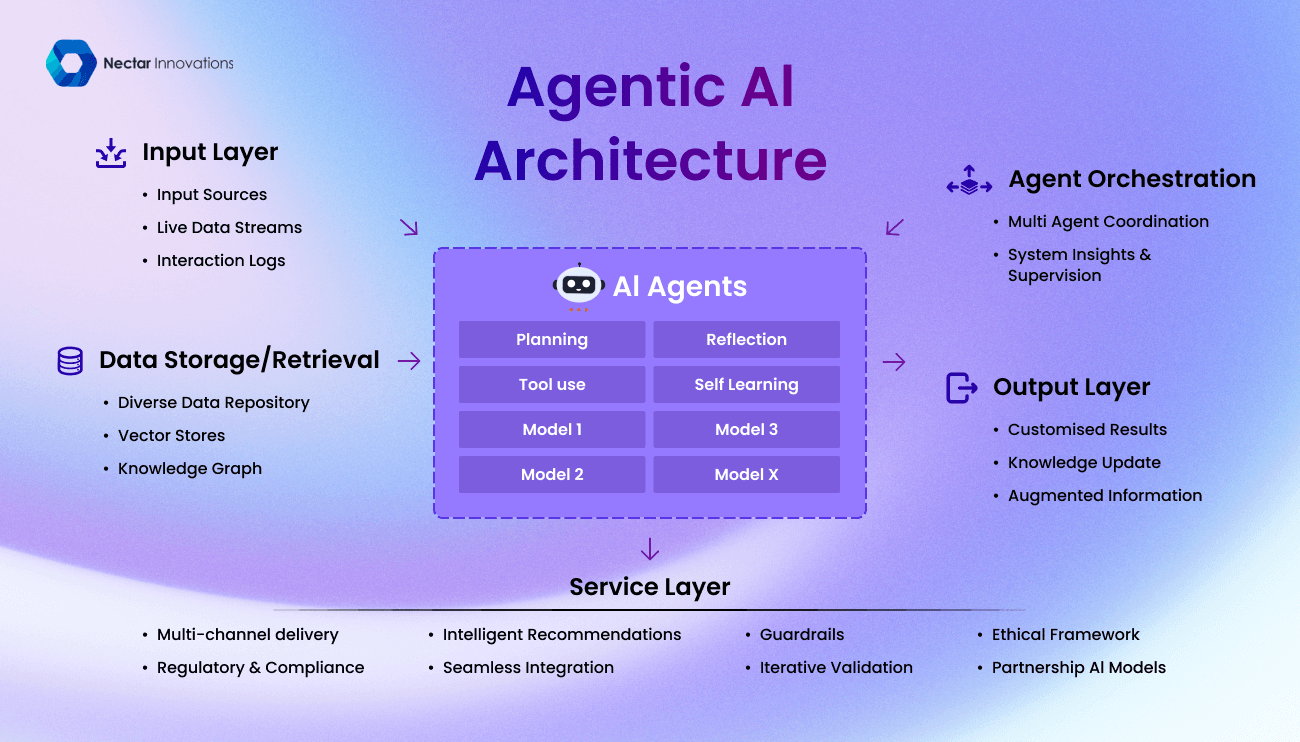
Most healthcare organizations build AI scheduling systems backwards. They start with the AI model and hope the rest falls into place.
Here's what I've learned after watching both successful implementations and expensive failures: your architecture determines whether this thing works under real clinical pressure or breaks the first time your EHR goes down for maintenance.
- The Three-Layer Rule
The practices that avoid implementation disasters separate three distinct functions:
Decision Layer: This controls when to schedule appointments versus when to escalate to humans. One health system I worked with spent months debugging unpredictable AI behavior before realizing they needed explicit rules for conversation flow. The AI can't improvise clinical decisions.
Action Layer: This handles the actual work—checking provider calendars, sending appointment confirmations, updating patient records. Think of it as your digital staff member who executes tasks but doesn't make judgment calls.
Data Layer: This securely connects to your EHR and practice management systems. When designed properly, it isolates all the HIPAA compliance complexity so your scheduling logic stays simple.
The separation matters because each layer fails differently. Your conversation logic might need updates while your data connections remain stable. Your EHR vendor might change APIs while your scheduling rules stay constant.
- Memory That Actually Helps
Here's a pattern I see repeatedly: patients call back because the AI "forgot" what they discussed yesterday. AgentCore Memory solves this through two mechanisms that actually work in healthcare environments.
Short-term memory keeps track of everything within a single conversation. Patient mentions they need a cardiologist who speaks Spanish? The system remembers w ithout making them repeat it.
Long-term memory captures preferences across multiple interactions. If someone always books morning appointments, that preference sticks. This isn't just convenient—it reduces the cognitive load on patients dealing with complex medical situations.
Most importantly, this approach handles the reality of healthcare scheduling: conversations get interrupted, patients call back with questions, and preferences matter for compliance.
- The Language Problem Nobody Talks About
One in five Americans speaks a language other than English at home. Most AI scheduling systems handle this poorly or not at all.
The healthcare organizations getting this right use modern language models that process multiple languages simultaneously rather than trying to translate everything. This approach cuts communication errors by 60% while improving patient satisfaction.
But here's what matters for your operations: multilingual capability isn't just about serving diverse populations. It's about reducing the staff time spent on complex scheduling calls that could be handled automatically.
The AI Model Selection Mistake Most Healthcare Organizations Make
Here's the pattern I see repeatedly: healthcare organizations pick one AI model and expect it to handle everything from casual patient conversations to critical safety decisions.
That approach fails because different scheduling tasks require different types of intelligence.
- Match conversation handling to language models
Large language models handle the conversational part well. GPT-4 and Claude-3 can interpret when a patient says "I need to see Dr. Smith next Thursday morning" and understand they want a specific provider at a specific time. For medical terminology, BioBERT or ClinicalBERT perform better than general models.
But here's what I tell healthcare executives: these models are conversational, not predictive. They excel at understanding what patients mean, not at predicting what patients will do.
- Use specialized models for predictions that matter
For the decisions that directly impact your revenue, you need different tools:
Patient triage: Random forest classifiers hit 82% accuracy when processing clinical notes alongside structured data. More importantly, they give you explainable results your clinical staff can review.
No-show prediction: Gradient boost models achieve 86% accuracy in identifying likely no-shows, reducing actual no-shows by 50.7%. That's measurable ROI you can track.
The key difference? These models optimize for specific outcomes rather than general conversation.
- Keep safety decisions rule-based
For anything involving patient safety or regulatory compliance, rule-based systems remain essential. They apply predefined logic to patient data with complete transparency.
When a patient mentions chest pain during scheduling, you want explicit rules triggering immediate clinical review—not a language model making probabilistic decisions about cardiac symptoms.
The most effective systems combine all three approaches. Language models handle conversations, specialized classifiers make predictions, and rule-based systems enforce safety protocols.
Getting Your Scheduling Assistant Live Without Breaking Things
Most healthcare AI implementations fail during deployment, not development. I've watched organizations spend months building solid scheduling systems only to crash them against clinical reality in the first week of testing.
The difference between successful deployments and expensive mistakes usually comes down to how you handle the testing phase. Do it wrong, and you'll be explaining to your board why patient satisfaction scores dropped and staff are demanding the old system back.
- Test in Silence Before Anyone Knows It's There
Silent trials solve the fundamental problem of AI testing: you need real patient interactions to find real problems, but you can't risk patient care to get them. Run your scheduling assistant alongside your current system, processing actual patient requests but keeping the AI responses hidden from staff.
Most executives skip this step because it feels like extra work. That's a mistake.
Here's what silent trials actually catch:
- Performance collapse when clean training data meets messy real-world inputs
- Workflow bottlenecks that looked fine in testing environments
- Data quality issues that only surface under production load
One health system I worked with saw their AI model drop from 90% accuracy in testing to essentially random performance (50%) when first exposed to real patient calls. After retraining with actual data patterns, accuracy recovered to 85-91%. Without silent trials, they would have launched a system that scheduled patients incorrectly half the time.
- Keep Humans in the Loop, But Do It Smart
Complete automation sounds appealing until something goes wrong and nobody knows how to fix it. The question isn't whether to keep humans involved—it's how to do it without defeating the purpose of automation.
I've seen two common mistakes:
Mistake one: Making humans review every AI decision. This creates busywork without adding value. Staff get overwhelmed, start rubber-stamping AI outputs, and miss actual problems when they occur.
Mistake two: Removing humans too quickly. Studies show physician skills deteriorate after just three months of heavy AI assistance. Your staff needs to maintain competency for when the system fails.
The approach that works: staged deployment with clear escalation rules. Start with AI handling simple scheduling requests while humans manage complex cases. Gradually expand AI responsibility as you prove reliability, but maintain human oversight for high-risk decisions.
Run tabletop exercises where you simulate AI failures. What happens when the system starts scheduling patients for the wrong doctor? When it misses urgent appointment requests? Your staff should know exactly how to respond before these scenarios happen in real life.
- Build Systems to Catch Problems Before They Escalate
Healthcare AI fails differently than other software. A scheduling bug doesn't just inconvenience users—it affects patient care. You need monitoring systems designed for these stakes.
Essential monitoring capabilities:
- Real-time performance tracking to catch accuracy degradation
- Automated rollback when key metrics drop below thresholds
- Version control that lets you quickly revert to previous models
- Incident response procedures specific to patient-facing AI
The FDA is moving away from one-time testing toward continuous monitoring requirements. Static benchmarks don't predict how AI behaves when patient demographics shift, new providers join your practice, or scheduling patterns change seasonally.
What would happen if your scheduling assistant started making mistakes at 2 AM on a weekend? Do you have procedures to detect problems, notify the right people, and switch back to manual scheduling until issues are resolved?
Most healthcare organizations discover these gaps only after problems occur. Build your monitoring and response systems before you go live, not after.
What Actually Happens Next
Most healthcare executives expect AI scheduling to be harder than it is.
The technical pieces—APIs, models, interfaces—are straightforward if you follow the framework above. What catches people off guard is the organizational change. Your staff will resist at first. Patients will complain about talking to a machine. Your EHR vendor will blame integration issues on "AI complexity."
Here's what I tell executives when they ask if it's worth it: The organizations moving fastest aren't the ones with the biggest budgets or the most technical expertise. They're the ones whose leadership decided that patient access problems are business problems, not IT problems.
Your scheduling bottlenecks cost more than you think. Not just the obvious revenue from missed appointments, but the compound effect: frustrated patients who switch providers, staff burnout from repetitive tasks, and the opportunity cost of having your best people answer phones instead of focusing on care.
The real question isn't whether these systems work—they do when built properly. It's whether you can afford to keep managing scheduling the way you always have while your competitors automate their patient access.
What would change in your organization if patients could book, reschedule, and get reminders without your staff touching any of it?
Key Takeaways
Building an AI scheduling assistant for healthcare requires strategic planning across five critical phases to ensure successful implementation and patient safety.
- Define clear boundaries first: Identify specific use cases like booking, rescheduling, and reminders while determining when AI handles tasks versus requiring human intervention.
- Prioritize data infrastructure: Integrate with EHR systems using FHIR standards and implement robust consent management with comprehensive audit trails for compliance.
- Design layered architecture: Separate orchestration, action, and data layers while using AgentCore Memory for context retention and multilingual accessibility.
- Combine multiple AI models strategically: Use LLMs for natural conversations, supervised classifiers for triage and no-show prediction, and rule-based logic for safety compliance.
- Validate through rigorous testing: Run silent prospective trials before deployment, maintain human-in-the-loop oversight, and implement MLOps for continuous monitoring and rollback capabilities.
Healthcare practices implementing AI scheduling assistants report reducing no-shows by up to 50.7% while cutting hold times by 75%, demonstrating the transformative potential when these systems are built with proper planning and safety protocols.
FAQs
- How does an AI scheduling assistant benefit healthcare providers?
AI scheduling assistants automate appointment booking, send reminders, and manage cancelations, freeing up staff time and reducing no-show rates. They can provide 24/7 scheduling assistance and significantly improve operational efficiency.
- What are the key components needed to build an AI scheduling assistant for healthcare?
Essential components include integration with EHR systems, a robust data infrastructure using FHIR standards, a layered AI architecture, appropriate AI models for different tasks, and rigorous testing and monitoring protocols.
- How can healthcare providers ensure patient data privacy when using AI scheduling assistants?
Implementing proper consent management, maintaining comprehensive audit trails, and adhering to HIPAA regulations are crucial. Using secure data exchange protocols like SMART on FHIR also helps protect patient information.
- What types of AI models are best suited for healthcare scheduling tasks?
A combination of models works best: Large Language Models (LLMs) for natural conversations, supervised classifiers for triage and no-show prediction, and rule-based systems for ensuring safety and regulatory compliance.
- How can healthcare providers validate the performance of their AI scheduling assistant?
Providers should run silent prospective trials to test the AI in real-world conditions without affecting patient care, implement human-in-the-loop pilots for oversight, and use MLOps practices for continuous monitoring and quick issue resolution.



 by
by